

By Coach Den — Nutritionist & Low Carb Coach, 10+ Years Experience
Founder, LowCarb.ph
When people ask me what beverages are truly compatible with a low carb or ketogenic lifestyle, my answer is simple:
Water first. Black coffee second.
After coaching more than 700 clients in Metro Manila and online, I’ve observed a consistent pattern:
Clients who consume black coffee strategically during fasting report less hunger.
Type 2 diabetics experience fewer sweet cravings.
Weight loss adherence improves.
Energy levels stabilize.
Lab markers improve alongside proper low carb implementation.
But this is not about adding cream, sugar, syrups, or artificial sweeteners.
This is about pure black coffee — no milk, no sugar, no sweeteners.
This article is a clinical, science-based discussion of why black coffee fits beautifully into a properly structured low carb or ketogenic diet. If you are new to the fundamentals of carbohydrate restriction, start with my full guide here:
👉 WHAT IS LOW CARB DIET?
👉 What is Keto? Is It Safe?
Plain brewed black coffee contains:
~2–5 calories per cup
0 grams sugar
0 grams fat
0 grams protein (negligible)
No significant carbohydrates
This makes it metabolically neutral in terms of glucose load.
Unlike milk, cream, or sugar-laden coffee beverages, pure black coffee does not stimulate a meaningful insulin response in healthy individuals.
For those following low carb or keto, this is critical.
Because the entire foundation of carbohydrate restriction revolves around:
Lowering insulin
Improving insulin sensitivity
Encouraging fat oxidation
Supporting metabolic flexibility
Black coffee does not disrupt these goals.
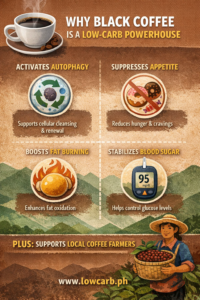
Autophagy is the cellular “self-cleaning” process where damaged proteins and dysfunctional organelles are recycled. It is activated primarily by:
Fasting
Caloric restriction
AMPK activation
mTOR suppression
Coffee contains bioactive compounds such as:
Caffeine
Chlorogenic acids
Polyphenols
Research shows:
Caffeine may activate AMPK (adenosine monophosphate-activated protein kinase) — a cellular energy sensor.
AMPK activation suppresses mTOR (mechanistic target of rapamycin).
Suppression of mTOR promotes autophagy pathways.
Animal and cellular studies demonstrate that coffee consumption can induce autophagy markers in liver and muscle tissues independent of caloric intake.
While we must be careful not to overstate human autophagy data, the mechanistic pathway is biologically plausible.
This is why I position black coffee as:
A fasting-compatible beverage that may enhance fasting-induced autophagy when consumed without additives.
Not magic. Not a miracle. But supportive.
In clinical practice, I allow:
Water
Black coffee
Plain tea
Electrolytes
During:
16:8 fasting
18:6 fasting
OMAD (One Meal a Day)
Extended fasting (with supervision)
Pure black coffee:
Contains negligible calories
Does not significantly raise insulin
Does not interrupt fat oxidation
Therefore:
Black coffee does NOT break a metabolic fast.
However:
Adding milk = insulin response
Adding sugar = glucose spike
Adding cream in significant amounts = caloric intake
So the rule is clear:
If it has calories, sweetness, or dairy — it breaks your fast.
One of the biggest struggles for new low carb clients is:
Morning hunger
Sugar cravings
Midday snacking
Caffeine stimulates:
Epinephrine release
Dopamine signaling
Mild appetite suppression
In my 700+ client experience:
Type 2 diabetics who drink black coffee during fasting windows report:
Reduced cravings for sweets
Better appetite control
Improved adherence to low carb structure
When insulin remains low and appetite is controlled, weight loss becomes sustainable.
This aligns with existing research showing caffeine may:
Increase satiety
Reduce perceived hunger temporarily
Enhance diet adherence
Caffeine increases catecholamines (adrenaline, noradrenaline), which:
Stimulate lipolysis
Increase fatty acid mobilization
Enhance exercise performance
Studies demonstrate caffeine can:
Increase fat oxidation during endurance activity
Improve workout output
Enhance metabolic rate acutely
This is why I recommend black coffee:
Morning
Pre-workout
During fasting window
It becomes a metabolic tool — not just a beverage.
After more than a decade in practice:
Almost all 700+ of my clients consume black coffee.
Lab results generally improve when combined with structured low carb nutrition.
Type 2 diabetics report better glucose control.
Clients with previous sweet beverage addiction transition successfully using coffee.
For those with cortisol spikes or anxiety:
I recommend:
Drink coffee 2 hours after a meal.
Avoid empty-stomach coffee if stress-sensitive.
Limit intake to 2–4 cups.
Cutoff at 3 PM to protect sleep quality.
Sleep protection is non-negotiable for metabolic health.
There is fear that coffee raises blood pressure.
Here’s the clinical reality:
Caffeine can cause a temporary rise in BP.
In habitual drinkers, tolerance develops.
Long-term coffee consumption is not consistently associated with hypertension.
In my coaching practice:
Safe for controlled hypertensive patients.
Take maintenance medication 2 hours after coffee.
Avoid if BP is uncontrolled.
As always, personalization matters.
Black coffee is not for everyone.
Limit intake if you have:
GERD
Anxiety disorders
Severe insomnia
Pregnancy
Uncontrolled hypertension
Clinical nutrition is not one-size-fits-all.
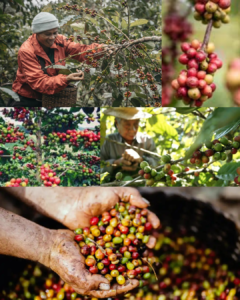
As someone based in Metro Manila, I strongly advocate buying from:
Local Barako producers
Benguet Arabica farmers
Sagada coffee growers
Supporting Filipino agriculture:
Strengthens local economy
Promotes sustainable farming
Encourages ethical sourcing
Reduces reliance on imported commercial blends
Health is not just metabolic.
It is economic, agricultural, and cultural.
When you buy locally grown coffee, you are investing in:
Filipino livelihoods
Rural communities
Agricultural preservation
Low carb is not just about food restriction.
It is about food awareness.
2–4 cups per day
Cutoff time: 3 PM
Best times:
Morning
Pre-workout
During fasting window
Avoid:
Sugar
Cream
Flavored syrups
Artificial sweeteners (prefer minimal use)
For cortisol-sensitive individuals:
Drink 2 hours after a meal.
Black coffee supports:
Lower insulin
Increased fat oxidation
Fasting adherence
Appetite control
Potential autophagy enhancement
But remember:
Coffee does not replace structured nutrition.
If you want the full foundation:
👉 WHAT IS A LOW CARB DIET?
👉 What is Keto? Is It Safe?
This article complements those guides.
Black coffee is:
Zero sugar
Fasting-compatible
Autophagy-supportive (mechanistically)
Appetite-controlling
Fat oxidation enhancing
Budget-friendly
Locally sustainable
Used correctly, it becomes a powerful metabolic ally.
Used carelessly (with sugar, cream, or late-night consumption), it becomes counterproductive.
As I tell my clients:
Drink it black. Drink it earlier in the day. Respect your sleep. Support local farmers.
That’s how coffee becomes part of metabolic medicine.
The information provided in this article is for educational and informational purposes only and is not intended as medical advice, diagnosis, or treatment. Although Coach Den is a licensed nutritionist and low carb coach with over 10 years of experience and has worked with more than 700 clients, individual health conditions vary.
Always consult your physician or qualified healthcare provider before making changes to your diet, fasting routine, caffeine intake, or medication schedule—especially if you have diabetes, hypertension, cardiovascular disease, anxiety disorders, gastrointestinal conditions, or are pregnant or breastfeeding.
Black coffee may cause temporary increases in heart rate and blood pressure and may not be suitable for everyone. Never discontinue prescribed medications without medical supervision.
LowCarb.ph does not assume liability for any adverse effects resulting from the application of information contained in this content.

A Researcher’s Evidence-Based Review + Real Case Data + 4-Week
The Complete Filipino Guide to Weight Loss, Hypertension Control, Diabetes
If you’ve ever tried dieting in the Philippines, you know
List of Low Carb Foods (Complete Beginner Guide for Filipinos)