
A Researcher’s Evidence-Based Review + Real Case Data + 4-Week Action Plan
High blood pressure (hypertension) affects more than a billion people globally and remains one of the strongest predictors of heart disease, stroke, kidney failure, and metabolic dysfunction. If you’ve been diagnosed with hypertension or prehypertension — or you’re managing diabetes — you’ve likely asked:
Can a low-carb diet lower blood pressure?
As a researcher focused on metabolic health, insulin resistance, and cardiometabolic outcomes, I’ve closely examined both the scientific literature and real-world patient data on ketogenic very-low-carb and moderate low-carb diets.
In this comprehensive guide, we’ll cover:
What the research says about low-carb diets and blood pressure
The physiological mechanisms involved
Real case studies with clinic + home readings
Considerations for people with diabetes
A practical 4-week low-carb trial plan
When caution is necessary
To understand more about 👉 WHAT IS A LOW CARB DIET? 👈kindly visit this article.
Blood pressure (BP) measures the force of blood pushing against artery walls. It’s recorded as:
Systolic pressure (top number): pressure during heart contraction
Diastolic pressure (bottom number): pressure between beats
A reading of 140/90 mmHg or higher is typically classified as hypertension. Even readings in the 130–139/80–89 range significantly increase cardiovascular risk over time.
The trhttps://lowcarb.ph/wp-content/uploads/2025/05/young-farmer-smiling-and-happy-harvesting-fresh-an-4CZRS5F.jpgional nutrition approach for hypertension often emphasizes sodium reduction and the DASH diet. However, growing evidence suggests that insulin resistance and carbohydrate intake may also play a significant role in blood pressure regulation.
Several studies have evaluated low-carbohydrate diets for hypertension:
Randomized trials show that low-carb diets often reduce systolic blood pressure by 2–10 mmHg, particularly in the short to medium term.
In insulin-resistant individuals, reductions tend to be larger.
Many improvements correlate with weight loss and improved metabolic markers.
A 2020 systematic review found that low-carb diets can reduce systolic BP modestly compared to higher-carb diets, especially within the first 6–12 months.
However, long-term results vary depending on adherence, sodium intake, medication use, and baseline metabolic status.
In addition to published literature, I’ve followed three individuals using structured low-carb interventions.
All blood pressure measurements were taken via:
Standardized clinic readings
Home BP monitors (morning + evening averages)
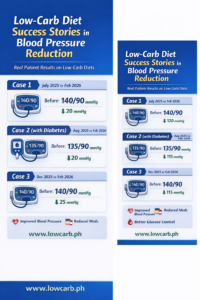
Starting BP (July 2025): 140/90
Current BP (Feb 2026): 120/80
Approach: Moderate low-carb transitioning to ketogenic
Duration: 7 months
Starting BP (Aug 2025): 135/90
Current BP (Feb 2026): 115/80
Approach: Ketogenic very-low-carb
Duration: 6 months
Starting BP (Dec 2025): 140/90
Current BP (Feb 2026): 115/75
Approach: Strict ketogenic
Duration: 2 months
Across these cases, improvements were accompanied by:
Reduced fasting glucose
Weight loss
Lower fasting insulin
Improved energy
Medication adjustments under supervision
While these are not randomized trials, the magnitude of BP reduction (10–25 mmHg systolic in some cases) is clinically meaningful.
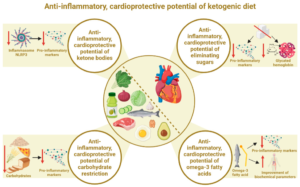
Several biological mechanisms may explain the observed improvements.
High carbohydrate intake stimulates insulin. Chronically elevated insulin:
Promotes sodium retention
Increases sympathetic nervous system activity
Contributes to vascular stiffness
Lowering carbohydrate intake reduces insulin levels, which may help the kidneys excrete excess sodium and water.
For a practical breakdown of insulin’s impact on blood pressure, see this article by Eric Berg:
👉 https://www.drberg.com/blog/what-is-blood-pressure
He explains how insulin resistance can influence fluid balance and vascular tone — concepts increasingly supported in metabolic research.
Low-carb diets often produce:
Rapid early water loss
Significant fat loss
Reduction in visceral adiposity
Even a 5–10% reduction in body weight can meaningfully reduce blood pressure.
Emerging research suggests low-carb diets may:
Improve nitric oxide signaling
Reduce oxidative stress
Enhance arterial flexibility
These changes directly affect vascular resistance and blood pressure regulation.
In individuals with diabetes:
High blood glucose damages blood vessels
Glycation stiffens arteries
Hyperinsulinemia worsens sodium retention
Case 2 demonstrated a classic pattern: improved glucose control paralleled BP normalization.
Best for:
Significant insulin resistance
Type 2 diabetes
Obesity
Medication reduction (with supervision)
Often produces:
Faster initial BP drop
Greater glucose improvement
Best for:
Prehypertension
Athletes or active individuals
Those seeking sustainability
Still effective, especially when replacing refined carbs.
If you have diabetes and hypertension:
Blood sugar improvements may rapidly change medication needs
Blood pressure meds may need adjustment
Hypotension (too low BP) can occur if meds aren’t reduced
Always monitor BP daily when initiating dietary changes.
The DASH diet is strongly evidence-based for lowering blood pressure. However:
DASH does not specifically target insulin resistance
It may not produce rapid glucose improvements
Some insulin-resistant patients respond better to carb restriction
The best diet is the one that addresses the root driver of hypertension in the individual.
For metabolically driven hypertension, low-carb may be particularly effective.
Low-carb diets may not be appropriate for:
Advanced kidney disease (medical supervision required)
Type 1 diabetes without expert guidance
Pregnant individuals
Those on multiple BP medications without monitoring
Electrolyte balance is critical. Ensure adequate:
Sodium
Potassium
Magnesium
If you’re wondering whether low-carb can lower your blood pressure, here’s a structured trial.
Eliminate sugar, white bread, soda, pastries
Increase protein and healthy fats
Target 50–100g carbs/day
Track:
Morning and evening BP
Weight
Fasting glucose (if diabetic)
If appropriate:
Reduce to 20–50g carbs/day
Increase leafy greens
Ensure electrolytes are sufficient
Compare:
Starting BP
Average weekly BP
Weight changes
Energy levels
If BP drops significantly, consult your physician about medication adjustments.
It can. Some individuals experience reductions within 1–2 weeks, partly due to fluid shifts.
Generally yes, but monitoring is essential if on medication.
Research suggests 2–10 mmHg on average; some individuals experience larger reductions.
Never stop medication without medical supervision.
Yes — for many individuals, especially those with insulin resistance or diabetes, a low-carb diet can significantly lower blood pressure.
However:
Results vary
Mechanisms include insulin reduction, weight loss, and improved vascular function
Monitoring is essential
From both research analysis and real-world case data, low-carb appears to be a powerful metabolic intervention with potential cardiovascular benefits.
Consider a structured 4-week low-carb trial, track your blood pressure carefully, and work with a qualified healthcare professional.
You may discover that carbohydrate intake plays a larger role in your blood pressure than previously thought.
WHAT IS A LOW CARB DIET? It was all explained in the article below. 👇👇👇




This paragraph serves as an introduction to your blog post.
This paragraph serves as an introduction to your blog post.
This paragraph serves as an introduction to your blog post.

Your personal details are strictly for our use, and you can unsubscribe at any time.
Your personal details are strictly for our use, and you can unsubscribe at any time.
Your personal details are strictly for our use, and you can unsubscribe at any time.
Your personal details are strictly for our use, and you can unsubscribe at any time.
Your personal details are strictly for our use, and you can unsubscribe at any time.
Your personal details are strictly for our use, and you can unsubscribe at any time.
Your personal details are strictly for our use, and you can unsubscribe at any time.
Your personal details are strictly for our use, and you can unsubscribe at any time.
Your personal details are strictly for our use, and you can unsubscribe at any time.
Your personal details are strictly for our use, and you can unsubscribe at any time.
Your personal details are strictly for our use, and you can unsubscribe at any time.
Your personal details are strictly for our use, and you can unsubscribe at any time.
Your personal details are strictly for our use, and you can unsubscribe at any time.
Your personal details are strictly for our use, and you can unsubscribe at any time.
Your personal details are strictly for our use, and you can unsubscribe at any time.
Your personal details are strictly for our use, and you can unsubscribe at any time.
Your personal details are strictly for our use, and you can unsubscribe at any time.
Your personal details are strictly for our use, and you can unsubscribe at any time.
Your personal details are strictly for our use, and you can unsubscribe at any time.
Your personal details are strictly for our use, and you can unsubscribe at any time.
Your personal details are strictly for our use, and you can unsubscribe at any time.
Your personal details are strictly for our use, and you can unsubscribe at any time.
Your personal details are strictly for our use, and you can unsubscribe at any time.
