
Cloves are one of the most powerful spices in the kitchen. A small amount can completely transform the aroma and flavor of food. But if you have ever tried buying cloves at the grocery store, you may have noticed something confusing: they are not always labeled simply as “cloves.”
In some stores they appear under different names, in different sections, and sometimes in different forms. In many cases, shoppers also unknowingly purchase low-quality cloves that have already lost most of their natural oils and aroma.
As a nutritionist and low-carb coach working with hundreds of clients over the past decade, I often recommend using natural spices like cloves to improve flavor without adding sugar or carbohydrates. This is especially helpful for people transitioning into a low-carb lifestyle where flavorful herbs and spices become essential tools in the kitchen.
If you are new to low-carb eating and want to understand the foundation first, I strongly recommend reading my complete guide on lowcarb.ph where I explain how carbohydrate restriction works, the science behind it, and how to start safely and effectively.
This article will focus specifically on:
• Where you can buy cloves
• The different names used in grocery stores
• How to identify high-quality vs low-quality cloves
• Practical buying tips from real kitchen experience
• Why cloves are useful in low-carb cooking
By the end of this guide, you will know exactly what to look for when buying cloves and how to avoid wasting money on poor-quality spices.
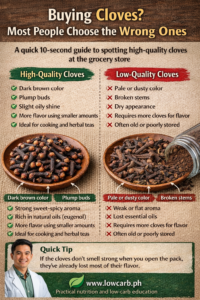
Cloves deliver intense flavor — warm, slightly sweet, and astringent — so a little goes a long way. For people following a low-carb diet, spices like cloves are a keto-friendly way to add interest to beverages, sauces, baked-good substitutions, marinades, and simmered dishes without sugar or carb-heavy condiments. Choosing the right cloves means deeper flavor with less quantity, better aroma for herbal teas or infused vinegar, and longer shelf life (so you don’t keep rebuying).
Retail packaging — and sellers who speak different languages — often use alternative names for cloves. If a pack uses one of these names, it’s the same spice:
Clove / cloves — the common English name (most grocery labels will show this).
Clove bud or clove buds — emphasizes you’re buying the flower bud (whole).
Clavo de olor — Spanish name you’ll sometimes see in Filipino or Latin markets.
Laung or laung (लौंग) — name used in South Asian contexts (Hindi/Urdu).
Cengkeh / cengkeh kering — Indonesian/Malay (common for Indonesian imports).
Syzygium aromaticum — the scientific name (useful on specialty or herbal packs).
Clove oil — liquid extract/essential oil (sold separately from dried buds).
Keep this mini-glossary on your phone when browsing different stores — the same spice shows up under many labels.
Below are the most common shopping sources, what to expect at each, and quick tips so you don’t get a dud pack.
Why go: Often the freshest and cheapest single-purchase option for small quantities. Vendors sometimes get frequent restocks.
What to look for: Whole buds that are plump and not crumbly. Ask the vendor how recently they received the stock.
Tip: Buy a small sample, smell it on the spot. If aroma is weak, skip it.
Why go: Convenient, packaged, labeled; you can compare brands.
What to look for: Whole cloves in sealed glass or vacuum packs. Avoid dusty jars or bags with many broken pieces.
Tip: Whole cloves keep much longer than pre-ground. If the pack says “ground” and you want potency, pass.
Why go: Higher chance of premium grade, origin info (e.g., Maluku/Indonesia, Zanzibar), and bulk purchase options.
What to look for: Labels that list origin and a roast/processing date. Staff often let you smell before buying.
Tip: These shops often sell vacuum sealed small packs of single-origin cloves — best aromatic value.
Why go: Often sell organic or single-source spices and clove oil (for topical use or aroma).
What to look for: Organic certification if that’s important; sealed packs that preserve oils.
Tip: Expect a price premium for organic.
Why go: Wide selection (single origin, bulk, different grades), door delivery.
What to watch out for: Seller photos can be deceptive — check reviews, ask for a roast/freshness date, and buy small amounts first.
Tip: Favor sellers that disclose harvest/pack dates or provide high-resolution photos of actual product, not stock images.
Why go: Best price for large quantities (businesses, home canners).
What to look for: Food-grade packaging and traceability. Inspect a small sample before paying for kilos.
Tip: If you run a low-carb meal service or sell mixes, buy a 1–5 kg sample first.
Why go: Great for freshness and supporting small producers; you may find unique varietals.
What to look for: Direct talk with grower — ask when harvested and dried.
Tip: Good for single-origin stories on a recipe blog.
Here’s a practical, sensory checklist you can use in the store or when a pack arrives:
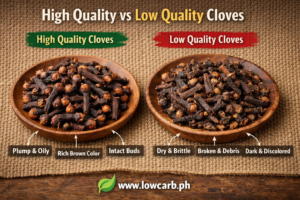
High quality: Buds are plump, intact, with a smooth head and a finished stem. Color is deep brown to mahogany with a slight oily sheen.
Low quality: Many broken pieces, lots of dust, gray/black patches (possible old stock or poor drying), hollow stems.
High quality: Strong, sweet-spicy scent with a clear note of eugenol (that characteristic clove bite). Aroma hits you even from a closed packet when squeezed.
Low quality: Weak, flat scent or musty/moldy smell — indicates age, poor storage, or moisture damage.
High quality: When you crush a bud between your fingers it should release oily residue and a burst of aroma. Whole buds can feel slightly sticky from natural oils.
Low quality: Feels dry, brittle, and releases little aroma when crushed.
High quality: A small chew is intensely spicy-sweet, slightly numbing (that eugenol mouthfeel), and long-lasting.
Low quality: Milder, bland, or oddly sour/fermented tasting.
High quality: Only cloves in the pack; no stones, fillers, or foreign matter.
Low quality: Presence of stems only, foreign debris, or crushed leaves — a sign of cheap processing.
High quality: Clear origin, pack/harvest date, sealed packaging, minimal broken fraction, food safety certification if for commercial use.
Low quality: No dates, poor sealing, lots of broken material labeled as “clove powder” or cheap “mixed spices.”
Whole cloves: Preferred for potency and shelf life. Whole buds keep their volatile oils longer (up to 2–3 years in airtight, cool, dark storage). Use them in stocks, stews, pickles, infusions, and to grind fresh when needed.
Ground cloves: Convenient but loses aroma fast (within months). Ground is fine for last-minute baking or spice blends you’ll use quickly. Avoid buying pre-ground if you want strong flavor retained over time.
Rule of thumb: buy whole cloves and grind a small amount as needed.
Store whole cloves in an airtight container (glass jar with tight lid is ideal).
Keep in a cool, dark place away from heat and direct sunlight. Avoid the stove area.
For long-term: vacuum seal small portions and keep in the fridge or freezer (defrost only what you need).
Ground cloves: aim to use within 3–6 months for best aroma.
Yes. Different growing regions produce slightly different flavor profiles:
Indonesia (Maluku Islands / Java): classic deep, sweet, robust eugenol note. Common in many Asian imports.
Zanzibar (Tanzania): warm, slightly fruity notes.
Madagascar / Comoros: aromatic, often prized by specialty suppliers.
If a pack lists origin, that’s a sign of traceability and usually a better product. Many bargain blends omit origin.
Home cook, occasional use: 25–50 g (a small jar) — lasts a long time when stored properly.
Regular low-carb cook / small household: 100–250 g.
Caterer / product maker: 1 kg+ from a bulk supplier (sample first).
For extracts or oils: buy high-quality whole cloves or food-grade clove oil from reputable suppliers.
Because cloves are potent, a little goes far — most home cooks only need a pinch to a half-teaspoon per recipe.
Buying pre-ground for long term — flavor loss: buy whole.
Ignoring aroma on purchase — smell before you buy where possible.
Overly cheap bulk with many broken pieces — often older stock or mixed with stems.
Storing in a warm place — will degrade oils quickly.
Using clove oil internally without guidance — clove oil is concentrated; use caution and consult a health pro.
Case A (meal satisfaction): A middle-aged client on a low-carb plan struggled with beverage cravings after dinner. I suggested a warm spice infusion made with cinnamon and 1–2 cloves steeped in hot water (no sugar). The client reported reduced cravings and greater evening satisfaction for several weeks. We used whole, fresh Indonesian-origin cloves from a specialty spice shop — aromatic and lasted many brews.
Case B (cooking swap): A home cook missed the “warm sweetness” of certain Filipino desserts while staying low-carb. We used ground clove sparingly in low-carb baked goods (0.125–0.25 tsp per batch) to mimic that flavor profile without added sugar. Buying whole cloves and grinding small amounts preserved aroma and lowered overall spice volume needed.
Case C (pantry economics): I advised a small meal-prep business owner to buy a 5-kg bulk lot from a trusted wholesaler after sampling. Their cost per meal dropped and flavor was consistent; they stored portions vacuumed and refrigerated to retain oils.
These are practical coaching anecdotes — they illustrate how quality and form affect results in low-carb kitchens.
Cloves and clove oil are generally safe as culinary spices. Clove oil is highly concentrated and should not be used internally in large amounts without medical advice. If you are using cloves for medicinal purposes (for example, concentrated oil topically or as an adjunct supplement), consult a licensed healthcare professional. This blog is for informational and culinary guidance, not medical treatment.
Buy whole cloves unless you need ground now.
Smell: strong, sweet-spicy aroma.
Crush: releases oily scent/feel.
Color: deep brown/mahogany, not gray/black.
Packaging: sealed, with harvest/pack date if possible.
Origin: prefer single-origin if available.
Purity: no fillers or large fraction of stems.
Storage: airtight, cool, dark — use small portions.
Q — Can I substitute ground cloves for whole?
A — Yes, but flavor fades quickly. If you substitute, use about half the ground amount compared to freshly ground whole cloves because ground can pack denser.
Q — How long do cloves last?
A — Whole cloves stored airtight and cool keep aromatic flavor for up to 2–3 years. Ground cloves are best within 3–6 months.
Q — Are organic cloves worth it?
A — Organic means fewer pesticide residues and often better traceability; it can be worth the premium if you use them a lot or for extracts.
Q — Can cloves be used in sugar-free syrups or extracts?
A — Yes — their potent aroma makes them excellent in low-carb spiced syrups (using erythritol/stevia if desired) and infusions. Use whole cloves and simmer gently to infuse.
Q — Can cloves lower blood pressure?
A — Yes — Visit the article to know more.

This paragraph serves as an introduction to your blog post.
This paragraph serves as an introduction to your blog post.
This paragraph serves as an introduction to your blog post.
Your personal details are strictly for our use, and you can unsubscribe at any time.
Your personal details are strictly for our use, and you can unsubscribe at any time.
Your personal details are strictly for our use, and you can unsubscribe at any time.
Your personal details are strictly for our use, and you can unsubscribe at any time.
Your personal details are strictly for our use, and you can unsubscribe at any time.
Your personal details are strictly for our use, and you can unsubscribe at any time.
Your personal details are strictly for our use, and you can unsubscribe at any time.
Your personal details are strictly for our use, and you can unsubscribe at any time.
Your personal details are strictly for our use, and you can unsubscribe at any time.
Your personal details are strictly for our use, and you can unsubscribe at any time.
Your personal details are strictly for our use, and you can unsubscribe at any time.
Your personal details are strictly for our use, and you can unsubscribe at any time.
Your personal details are strictly for our use, and you can unsubscribe at any time.
Your personal details are strictly for our use, and you can unsubscribe at any time.
Your personal details are strictly for our use, and you can unsubscribe at any time.
Your personal details are strictly for our use, and you can unsubscribe at any time.
Your personal details are strictly for our use, and you can unsubscribe at any time.
Your personal details are strictly for our use, and you can unsubscribe at any time.
Your personal details are strictly for our use, and you can unsubscribe at any time.
Your personal details are strictly for our use, and you can unsubscribe at any time.
Your personal details are strictly for our use, and you can unsubscribe at any time.
Your personal details are strictly for our use, and you can unsubscribe at any time.
Your personal details are strictly for our use, and you can unsubscribe at any time.

One Response