

If you’ve ever tried dieting in the Philippines, you know the struggle:
You eat less rice…
You feel hungry after 2 hours…
Then you end up snacking.
As a nutritionist and low-carb coach with 10 years of clinical experience in Metro Manila, I see this all the time.
The problem isn’t lack of willpower.
The problem is satiety — the ability of food to keep you full.
In this guide, I’ll show you:
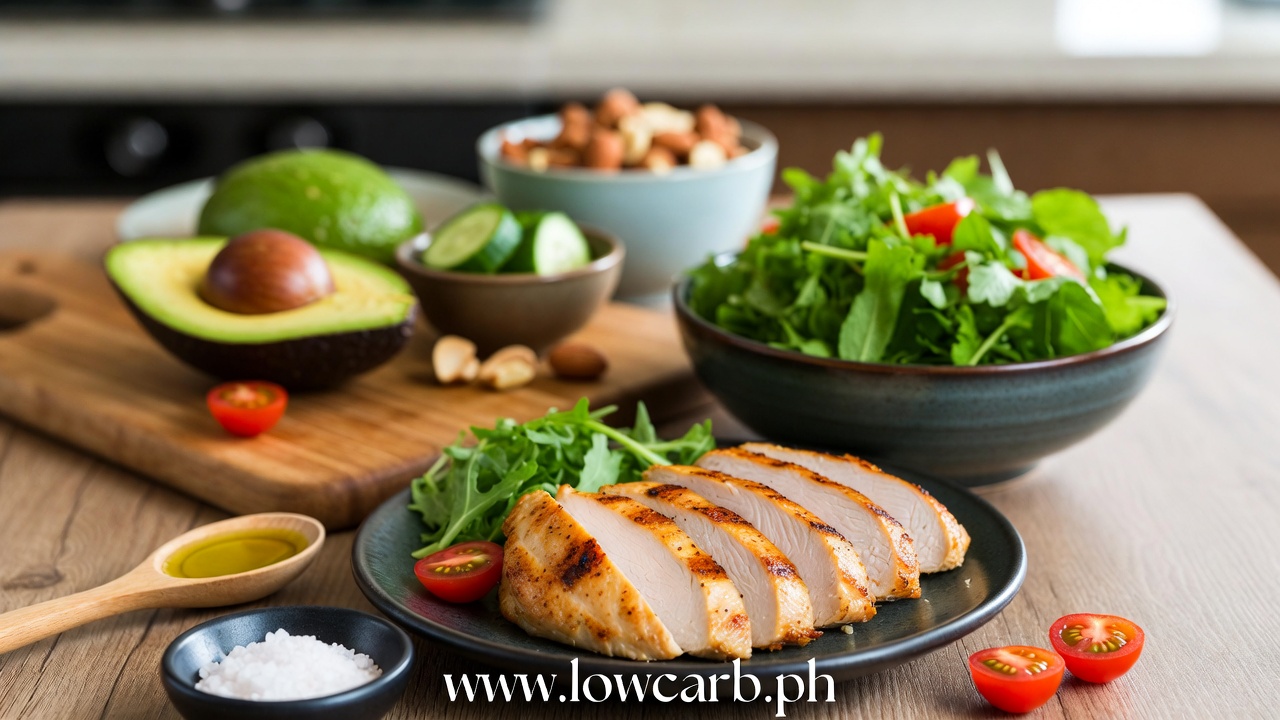
The most filling low carb foods
Why they control hunger better than rice and bread
Filipino-friendly swaps you can actually eat daily
Common “low carb” mistakes that cause hunger
Clinical insights from real case studies (from my pillar article)

If you’re new to low carb, read this alongside my complete beginner’s guide:
Satiety isn’t about eating less.
It’s about eating smarter.
Three major mechanisms explain why low carb foods fill you up:
Protein increases satiety hormones like GLP-1 and peptide YY while lowering ghrelin (the hunger hormone).
A landmark randomized trial published in the American Journal of Clinical Nutrition showed higher protein intake significantly increased fullness and reduced later calorie intake (Leidy et al., 2015).
Protein-rich low carb foods = longer fullness.
Healthy fats delay gastric emptying, meaning food stays in your stomach longer.
A review in Obesity Reviews (2010) confirmed dietary fat contributes to satiety when combined with protein.
This is why eggs cooked in butter or coconut oil feel more satisfying than plain oatmeal.
Refined carbs spike insulin → crash → hunger.
Low carb meals reduce glucose fluctuations, which is especially helpful for:
Type 2 diabetics
PCOS women with insulin resistance
People with hypertension and metabolic syndrome
A 2008 trial in Nutrition & Metabolism found low carb diets improved satiety while promoting fat loss compared to low-fat diets.
Here are the foods I repeatedly see work best.
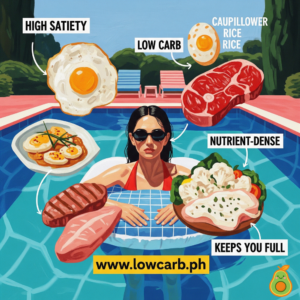
Boiled egg
Fried egg in coconut oil or butter
Eggs are one of the highest satiety-per-calorie foods.
A randomized trial in the International Journal of Obesity (Vander Wal et al., 2008) showed people who ate eggs for breakfast lost more weight and felt fuller compared to bagel eaters.
Why eggs work:
High-quality protein
Natural fat
Micronutrients that support metabolism
👉 Beginner Tip:
Start your day with 2 eggs instead of pandesal.
Example:
Pork sautéed with string beans
Beef with cabbage
Chicken with lettuce and garlic
When protein + fiber-rich vegetables combine, satiety increases dramatically.
Vegetables like:
Cabbage
String beans
Lettuce
Add volume without raising blood sugar.
Many Filipinos fear fat.
But when you airfry pork (without breading) and pair it with vegetables, it becomes:
High protein
Low carb
Highly filling
Fat + protein = powerful appetite control.
Steamed bangus or tilapia is one of the most underrated filling foods.
Fish protein has been shown in some studies to produce greater satiety compared to beef (Uhe et al., 1992, European Journal of Clinical Nutrition).
Best options:
Bangus
Tilapia
Salmon (if budget allows)
Add olive oil or butter for better satiety.
Almond seeds are satisfying because they contain:
Healthy fats
Fiber
Protein
But portion control is critical.
Studies show nuts increase fullness, but overeating them stalls weight loss.
👉 Limit to a small handful (about 20–25 almonds).
Many beginners struggle removing bread.
Coconut flour is:
High fiber
Low net carb
More filling than white flour
It slows digestion and prevents glucose spikes.
Pro tip:
Cook with butter or coconut oil for extra satiety.
If you remove rice too fast, cravings increase.
Instead, try:
Finely chopped cabbage sautéed in butter
Garlic + salt + pepper
It mimics rice texture but keeps carbs low.
Cauliflower rice is a global low-carb staple for good reason.
It:
Provides bulk
Keeps insulin stable
Prevents post-meal sleepiness
Pair it with:
Adobo
Giniling
Grilled pork belly (in moderation)
High fiber.
Low carb.
Very filling.
Ideal for diabetics trying to control post-meal glucose.
Across patients with:
Obesity
Type 2 diabetes
Hypertension
PCOS
The consistent pattern was this:
When meals were built around protein + natural fats + vegetable fiber,
hunger decreased naturally.
They didn’t need to “count calories.”
They felt full.
Blood sugar stabilized.
Waist circumference reduced.
Energy improved.
This is why food choice matters more than calorie restriction alone.
Read the detailed case outcomes here:
Even when people “go low carb,” they sabotage satiety.
Here’s what I warn my patients about:
Artificial sweeteners may stimulate appetite in some individuals.
A 2017 review in Current Gastroenterology Reports suggested sweet taste without calories may alter hunger signaling.
If you constantly crave sweets, reduce sweeteners.
Many “keto” bars:
Contain hidden starches
Use maltitol (raises blood sugar)
Are calorie dense but not filling
Whole foods always win.
Healthy ≠ unlimited.
Nuts are energy-dense.
Overeating them slows fat loss.
Common hidden carb sources:
Banana ketchup
Sweet soy sauce
Commercial marinades
Always check labels.
Focus on:
Eggs
Fish
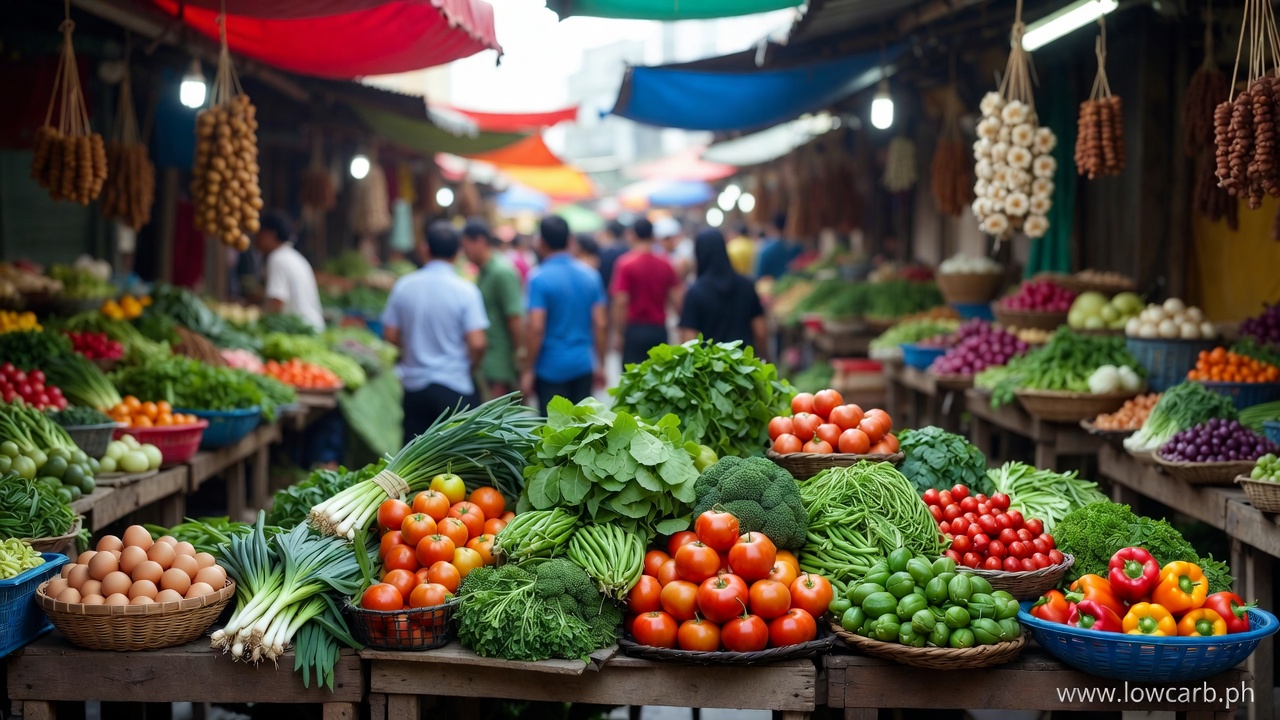
Leafy vegetables
Cauliflower rice
Low carb diets have been shown to improve glycemic control (Feinman et al., 2015, Nutrition).
Low carb diets may improve blood pressure, especially when weight loss occurs (Sacks et al., 2009, New England Journal of Medicine).
Reduce:
Processed foods
Sugary drinks
Increase:
Whole protein foods
Potassium-rich vegetables
PCOS is strongly linked to insulin resistance.
Lowering carbohydrate intake improves ovulation markers in several small clinical trials (Moran et al., 2003, Human Reproduction).
Best foods:
Eggs
Fish
Meat with vegetables
Healthy fats
Instead of:
❌ 1 cup rice + small meat + sweet sauce
Do this:
✅ Palm-sized protein
✅ 1–2 cups vegetables
✅ Natural fat (butter, coconut oil, olive oil)
Example:
Fried egg + sautéed cabbage
Pork belly + cauliflower rice
Steamed fish + broccoli rice
Simple.
Satisfying.
Sustainable.
After 10 years coaching patients, here’s what I’ve learned:
People don’t fail low carb.
They fail because they’re still hungry.
When you build meals around:
✔ Protein
✔ Natural fats
✔ Fiber-rich vegetables
Hunger becomes manageable.
Cravings decrease.
Consistency improves.
And results follow.
If you’re just starting, read the full foundational guide:
It explains how to structure your diet properly.
When built around whole foods and adequate nutrients, low carb diets are supported by growing clinical research.
Initially maybe. After adaptation (1–3 weeks), most patients report stable energy.
It depends on your condition. Beginners often start between 20–50g net carbs daily.
The most filling low carb foods are not exotic.
They are simple:
Eggs.
Meat.
Fish.
Vegetables.
Healthy fats.
When eaten properly, they control hunger naturally.
That’s the secret.
Not willpower.
Not starvation.
Smart food choices.
A Researcher’s Evidence-Based Review + Real Case Data + 4-Week
The Complete Filipino Guide to Weight Loss, Hypertension Control, Diabetes
If you’ve ever tried dieting in the Philippines, you know
List of Low Carb Foods (Complete Beginner Guide for Filipinos)
One Response