
By Coach Den, nutritionist and low carb coach · Last updated: October 28, 2026
“What can I actually eat on a low carb diet?” “Is rice allowed?” “What about fruits?” These are the questions I hear most from new clients, and if you’re asking them too, you’re not alone.
In my coaching practice, I’ve seen the same pattern over and over: most beginners don’t fail because low carb doesn’t work. They fail because nobody hands them a clear list of what to actually eat. That’s what this guide is for.
This article is your grocery list. For the science and framework behind standard low carb (50-100g carbs daily), read what is a low carb diet first. Together, the two give you a full system.
On a standard low carb diet, carbs typically stay between 50 and 100 grams a day. Instead of cutting carbs completely, you remove refined sugar, rice, bread, and pasta, cut back on high-carb fruit, and build meals around real, whole food.
Net carbs = total carbs minus fiber. Fiber doesn’t raise blood sugar the way starch and sugar do, so a vegetable with 8g total carbs and 4g fiber counts as roughly 4g net carbs, which makes it low carb friendly.
One honest caveat: “net carbs” isn’t a term the American Diabetes Association officially recognizes, and it recommends tracking total carbohydrate intake for the most predictable blood sugar response. I still use net carbs as a practical shortcut with clients, but if you’re diabetic and a food isn’t behaving the way the math says it should, trust your glucose meter over the label.
I organize this into seven groups: protein, vegetables, fruits, healthy fats, dairy, nuts and seeds, and Filipino-specific swaps.
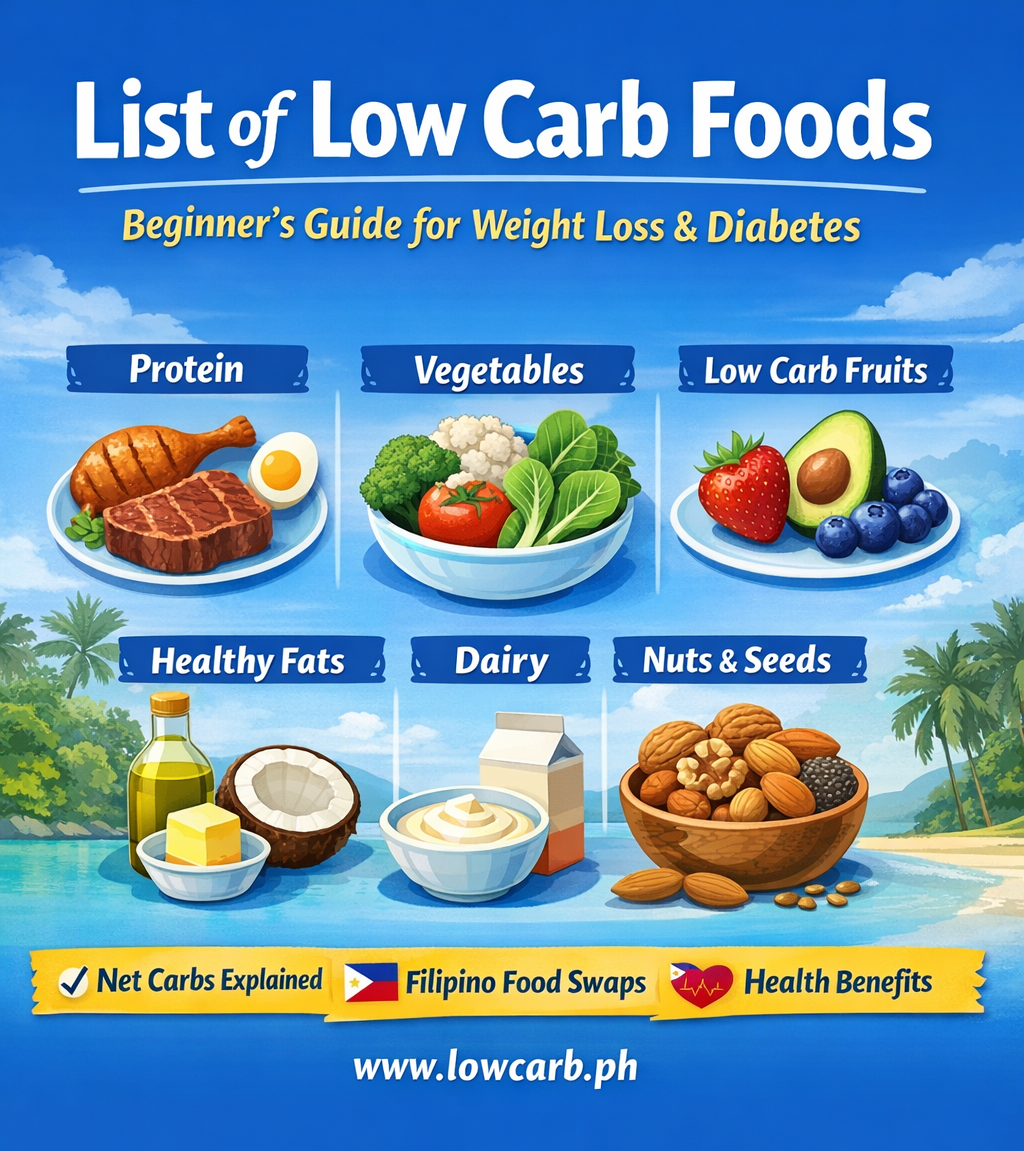
Protein is your foundation, especially for weight loss, PCOS hormone regulation, blood sugar stability, and reversing fatty liver.
Unprocessed meat has essentially 0 carbs, but skip sweet tocino, sugar-marinated BBQ, and processed meats with added dextrose or corn syrup.
Seafood is excellent for blood pressure through omega-3 fats, triglyceride reduction, and inflammation control. If blood pressure is your main concern, can a low carb diet lower blood pressure covers the research behind this.
Eggs are one of the most useful low carb foods available: high in protein, rich in choline for fatty liver reversal, and supportive of hormone production. For PCOS and insulin resistance specifically, eggs are a daily staple I recommend often.
Vegetables carry your fiber and micronutrients on this way of eating.
These help lower blood pressure through their potassium content, improve insulin sensitivity, and support gut health. I cover exactly how much potassium matters and which foods deliver it in potassium and low carb diet benefits.
Cauliflower matters most here because it directly replaces rice and mashed potatoes in a Filipino kitchen.
Fruit is healthy, but not all fruit fits a low carb plate.
Avocado in particular is ideal since it covers PCOS, hormone balance, fatty liver, and blood pressure all at once.
These spike blood sugar quickly. For diabetics and anyone with insulin resistance, they can quietly stall progress even when everything else on the plate looks right.
Low carb is not low fat. Healthy fats control hunger, stabilize blood sugar, support female hormone balance, and also help reduce fatty liver.
One of the biggest mistakes I see is clients using seed oils while genuinely trying to eat healthy. Avoid soybean oil, corn oil, canola oil, vegetable oil, and sunflower oil. These increase inflammation and can work against everything else you’re doing.
Still, cheese, unsweetened Greek yogurt, heavy cream, and plain full-fat yogurt all fit. Avoid sweetened yogurt and “low-fat” flavored yogurt, which is usually loaded with sugar to make up for the missing fat. Buying low-fat products that are secretly high in sugar is one of the most common mistakes beginners make.
Almonds, macadamia, walnuts, chia seeds, and flaxseeds are all solid choices. For which nuts are keto-friendly, I break down the carb counts nut by nut.
The common mistake here is overeating nuts. They’re calorie-dense and easy to overconsume without noticing. For weight loss, I keep clients to about one small handful a day.
Short answer: no, and even brown rice raises blood sugar significantly. Replace it with cauliflower rice, cabbage rice (repolyo), extra vegetables, or more protein and healthy fat. If rice is genuinely non-negotiable at a family meal, cooling and reheating rice can blunt part of the blood sugar spike, though it’s a modifier, not a green light.
No. Bread turns into glucose quickly, pandesal included.
No, the syrup and sago carry a high sugar load.
Still, you can order burger patties without the bun, or chicken without the sweet sauce. Just skip the rice, the spaghetti, and any gravy with sugar in it.
Low carb eating lowers insulin, and lower insulin makes fat burning easier. High protein foods increase satiety, while healthy fats prevent the cravings that usually derail a diet by 3pm.
Low carb helps reduce blood sugar spikes, lower A1C, and improve insulin sensitivity. Vegetables plus protein keep glucose stable across the day. If you want the fuller picture on why diabetes responds so strongly to carb reduction, see why diabetes is called the buy-1-take-10 disease.
Low carb reduces insulin-driven sodium retention, triglycerides, and inflammation, all of which affect blood pressure. Leafy greens add potassium on top of that.
Cutting sugar and refined carbs lowers liver fat accumulation, reduces triglycerides, and improves liver enzymes over time, so eggs, fish, and olive oil are some of the most useful foods here.
PCOS is strongly linked to insulin resistance, and lowering insulin through low carb eating reduces androgen excess, improves cycle regularity, and supports weight reduction. Healthy fats are essential here too, since hormone production depends on them.
Low carb works best when meals are planned, not improvised. If you’ve tried before and quit within a few weeks, why people quit low carb covers the reasons I see most often and how to plan around them.
Protein: eggs, chicken thighs, ground beef, bangus, sardines
Vegetables: kangkong, cauliflower, broccoli, pechay, ampalaya, eggplant
Fats: coconut oil, avocado oil, olive oil, butter
Extras: cheese, chia seeds, calamansi, avocado
If putting this list together every week feels like a chore, we deliver organic versions of most of these staples straight to your door through our produce store.
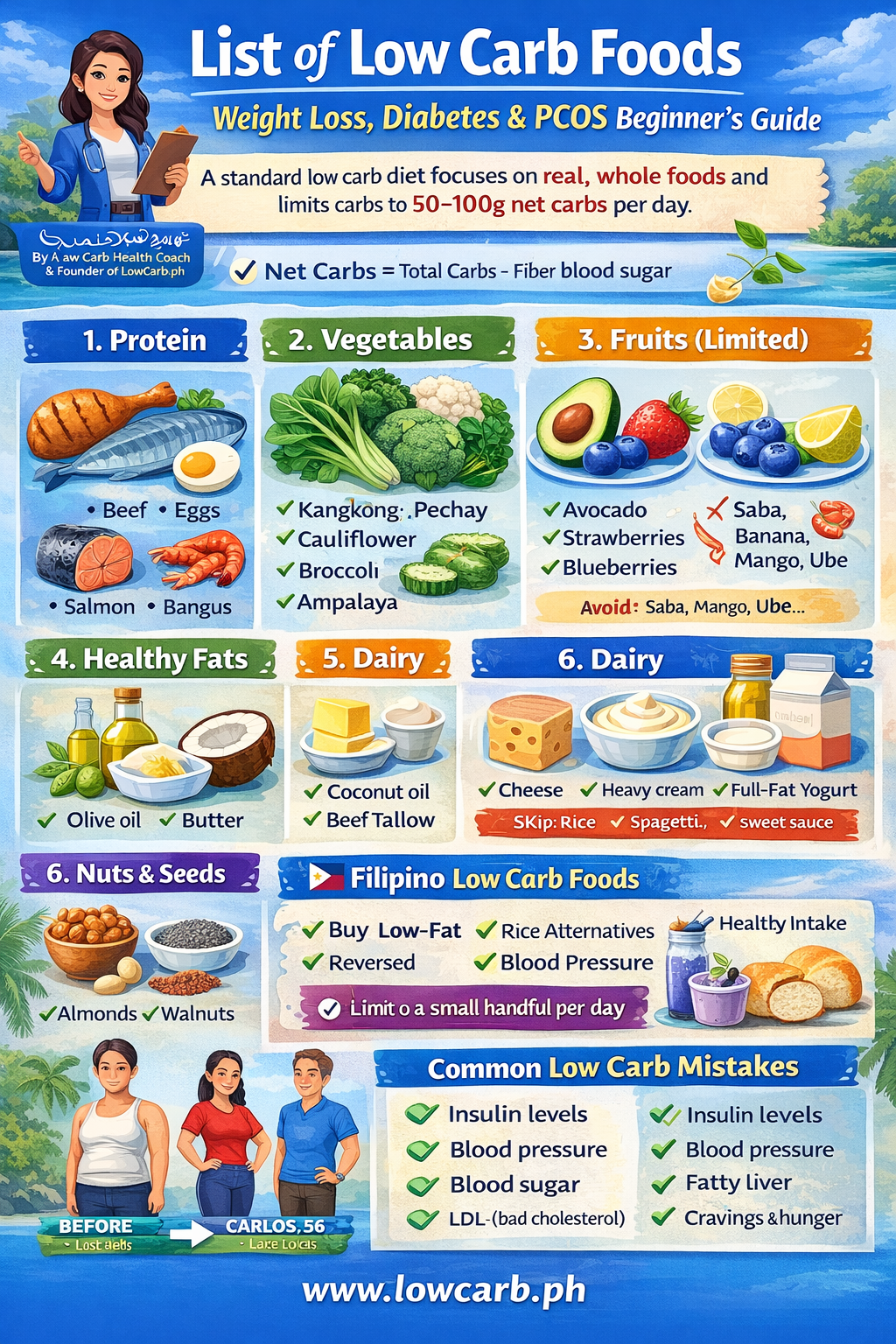
A low carb diet doesn’t mean starving. It means removing sugar and refined carbs, eating real food, and keeping insulin stable. This list is your grocery list. The low carb diet guide is your roadmap. Together, they give you the full system.
This article is for educational purposes and does not replace medical advice. If you have a medical condition or take medication, talk to your doctor before changing how you eat.
About the author: Coach Den
Coach Den is a nutritionist and low carb coach based in Metro Manila who has spent 10 years helping Filipinos lower their blood sugar, lose weight, and get off the rice-and-soda cycle with food they can buy at the palengke. Read how we research and update articles in our editorial policy.
This article is for general education and is not medical advice. Talk to your doctor before changing your diet, especially if you take medicine for diabetes or blood pressure. See our medical disclaimer.