
By Coach Den, nutritionist and low carb coach · Last updated: October 28, 2026
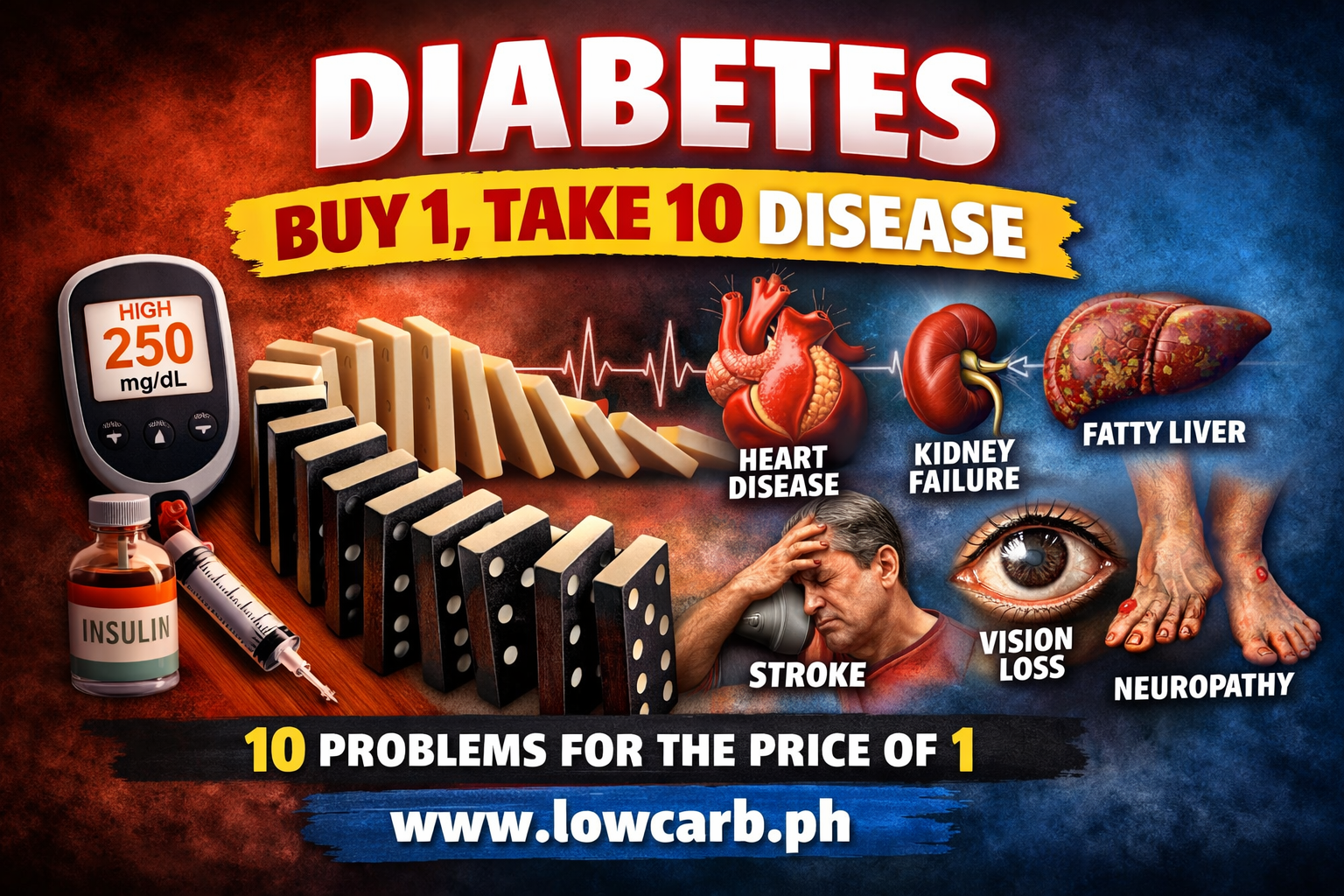
Type 2 diabetes gets treated like it’s just “high blood sugar.” That’s not what I see in my clinical experience with 700+ clients here in the Philippines. It’s almost never just one thing. I call it the “buy 1, take 10” disease, since one diagnosis usually comes bundled with several others, all driven by the same root cause. If you haven’t read the foundational piece yet, start with what is a low carb diet before diving into this one.
Insulin resistance is the root driver of type 2 diabetes, and it doesn’t stay contained to blood sugar. It triggers systemic inflammation, vascular damage, and hormonal disruption that show up across multiple organ systems at once. In my clients, several conditions show up alongside a diabetes diagnosis over and over: hypertension, fatty liver disease, chronic kidney strain, and erectile dysfunction. PCOS and hormonal imbalance, peripheral neuropathy, and elevated stroke and heart attack risk show up just as often. So do skin infections, eczema, and eye complications like cataracts and retinopathy.
Because insulin resistance damages tissue through a few shared pathways, not one isolated mechanism.
| Damage pathway | Conditions it drives |
|---|---|
| Blood vessel damage | Hypertension, stroke risk, heart attack risk |
| Organ fat accumulation | Fatty liver, kidney strain |
| Nerve and hormone disruption | Neuropathy, PCOS, erectile dysfunction |
| Microvascular damage | Retinopathy, cataracts |
That’s the domino effect. Address the insulin resistance at the root, and you’re working on all four pathways at once, not just the blood sugar number on a lab report.
A 2-year clinical trial published in Frontiers in Endocrinology followed patients with type 2 diabetes on a carbohydrate-restricted, nutritionally ketogenic diet, with continuous medical monitoring throughout. At the two-year mark, 53 to 55% of participants who stayed in the program met the criteria for diabetes reversal. Even more strikingly, 81% of those who started on insulin were able to eliminate it entirely, under physician supervision. Average A1c improvements held steady at close to a full point lower, and markers for fatty liver and inflammation improved right alongside it.
That’s not a guarantee for every person, and it required real medical monitoring, not a DIY approach. Still, it’s real trial data, not a marketing claim. It shows the mechanism works: lower insulin demand, and multiple complications tend to move in the right direction together, not just blood sugar in isolation.
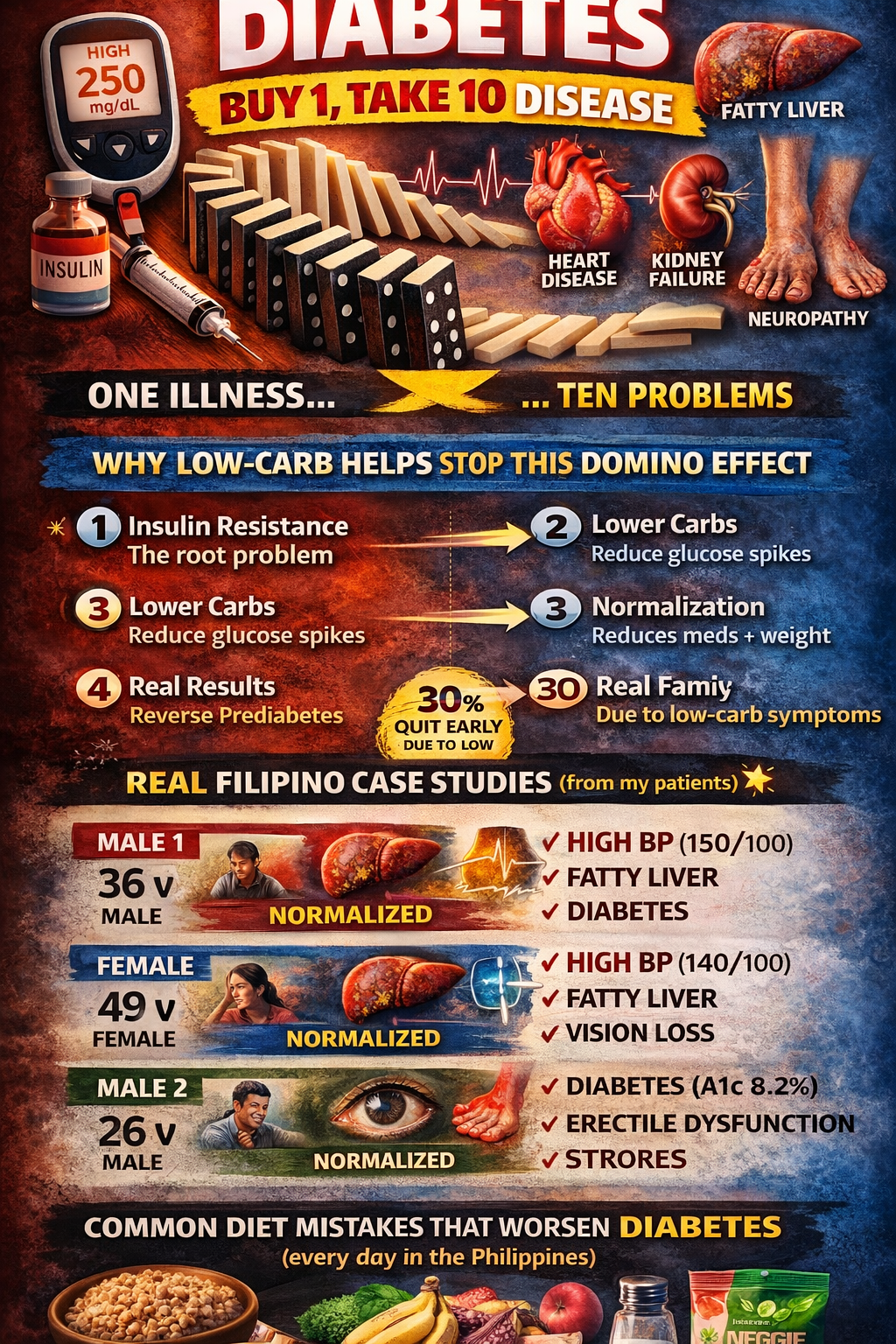
A recurring one: a client comes in with elevated blood pressure, an early fatty liver finding, and diabetes all at once. Usually, all three get discovered together, during the same round of lab work. Once we lower carbohydrate intake and start monitoring labs and blood pressure regularly, several markers tend to move in the right direction over the following months, not just the glucose numbers. Blood pressure often responds first, sometimes within weeks. Fatty liver markers and eye-related findings, though, tend to take longer, often closer to a year, to show meaningful improvement.
I’ve also worked with younger male clients in their 20s and 30s already dealing with diabetes and erectile dysfunction together, which surprises a lot of people. That combination is common enough in my practice that I no longer treat it as unusual. It tends to respond to the same underlying fix too: lower insulin, better vascular function.
Often, yes, especially when several complications are already stacked together. Stricter carbohydrate restriction lowers insulin demand more aggressively, which is exactly the lever driving most of the improvements in the domino effect. But strict keto also interacts more directly with insulin and certain diabetes medications. So it needs closer medical supervision than a moderate low carb approach does. See what is keto, and is it safe for the safety details before deciding how strict to go.
A few show up constantly in my coaching practice.
Beyond the health impact, the financial burden is real and compounds over time. Dialysis several times a week, ongoing insulin dependence, stroke hospitalization, and amputation all place serious strain on a family’s finances. That strain hits hardest when the affected person is the household’s main breadwinner. So addressing insulin resistance early is not just a health decision. It’s a practical one for anyone supporting a family in the Philippines.
Don’t start blind, especially with multiple conditions stacked together. Get baseline labs first, including A1c, fasting glucose, insulin, a lipid profile, and kidney function. Review all current medications with your physician before changing your diet too. Insulin and certain blood pressure medications need dose adjustments as your numbers improve. Monitor blood pressure regularly during the transition, and get your electrolytes right early, since that’s where most early symptoms actually come from. For the full nutritional foundation, read what is a low carb diet before making changes.
Often, yes, at least partially, since they share the same root cause. Blood pressure and fatty liver tend to respond fastest. Nerve damage and eye changes can be slower to improve and, in advanced cases, may not fully reverse, which is why catching this early matters so much.
Regular lab work and screening catch most of these before symptoms show up. Annual eye exams, kidney function tests, and blood pressure checks are worth doing even if you feel fine, especially once diabetes is already diagnosed.
Not necessarily. The Virta Health trial included people with long-standing type 2 diabetes and still saw meaningful reversal rates. Longer duration typically means a slower, more gradual response, not no response at all.
Since they share a root cause, addressing insulin resistance through carbohydrate reduction works on all of them at once. So you don’t need a separate plan for each condition. Severe or advanced cases, though, still need direct medical management alongside the diet change.
At minimum, fasting glucose and A1c, a lipid panel, kidney function markers, and blood pressure. If fatty liver was flagged, ask your doctor about repeat liver enzyme tests too, since that marker often takes the longest to shift and benefits from being checked periodically rather than just once.
The “buy 1, take 10” pattern isn’t inevitable. It’s what happens when insulin resistance goes unaddressed for years. Fixing the root cause is genuinely the most efficient way to work on all ten problems at once, not just one. If you’re ready to start building a low carb kitchen, our organic low carb store stocks the staples I recommend to clients starting this process.
This article is for educational purposes only and does not replace professional medical advice. Anyone taking insulin, sulfonylureas, or blood pressure medication should consult their physician before making dietary changes. Never discontinue a prescribed medication without medical supervision.
About the author: Coach Den
Coach Den is a nutritionist and low carb coach based in Metro Manila who has spent 10 years helping Filipinos lower their blood sugar, lose weight, and get off the rice-and-soda cycle with food they can buy at the palengke. Read how we research and update articles in our editorial policy.
This article is for general education and is not medical advice. Talk to your doctor before changing your diet, especially if you take medicine for diabetes or blood pressure. See our medical disclaimer.