
By Coach Den, nutritionist and low carb coach · Last updated: October 28, 2026
Low carb doesn’t fail people. Electrolyte mismanagement does.
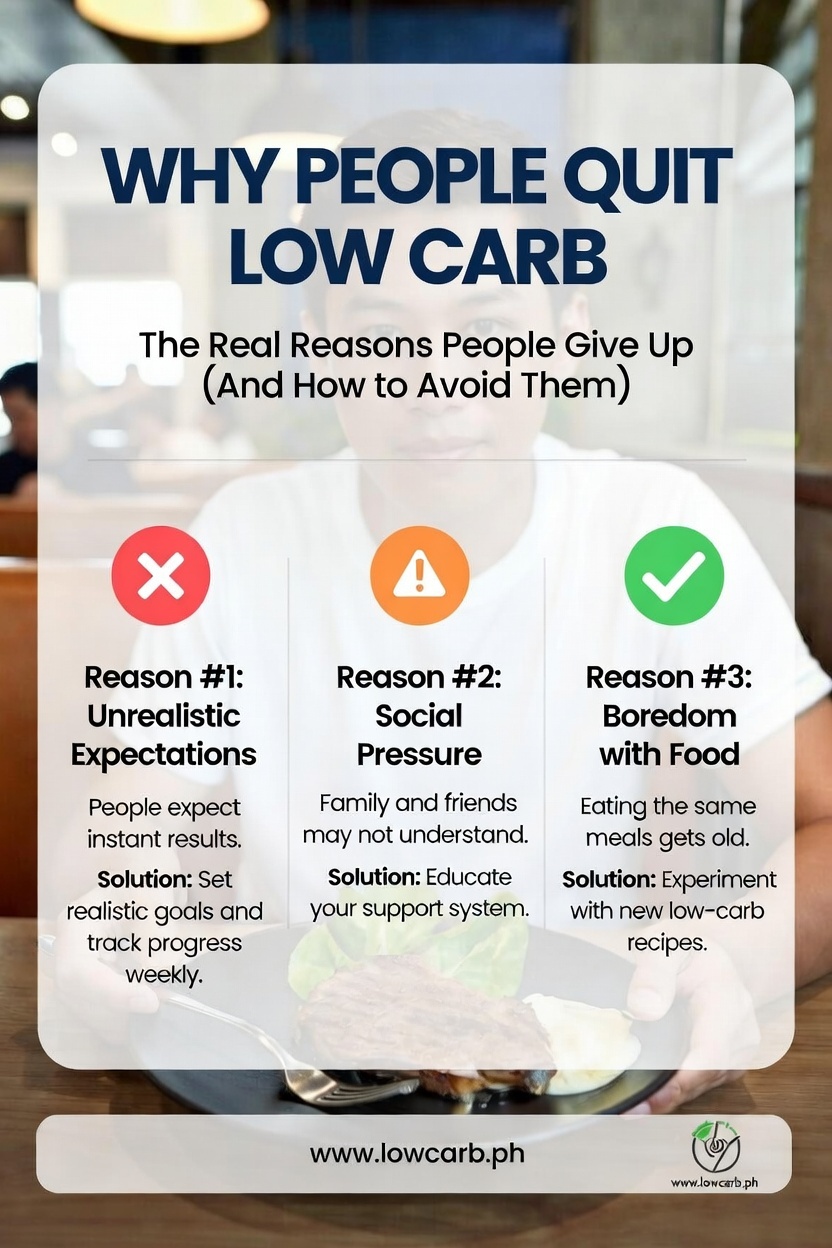
After coaching 700+ clients over the past 10 years, both in Metro Manila and online, I keep seeing the same pattern. Most people who quit low carb do so within the first 30 days, and almost all of them blame the diet. When I look closer, the real issue is almost always the same: rapid electrolyte shifts during carbohydrate restriction.
Before you assume low carb “isn’t for you,” it helps to understand what’s actually happening inside your body. This article builds on what is a low carb diet and explains why beginners struggle, and how to prevent it.

The most common complaints from early quitters are leg cramps, heart palpitations, dizziness, fatigue, weakness, headaches, brain fog, and what feels like blood pressure spikes. They usually say some version of “low carb made me feel worse.” But when carbs drop, your body sheds stored glycogen, and for every gram of glycogen, it holds roughly 3 to 4 grams of water alongside it.
This cascade is what people call “keto flu.” It isn’t a disease. It’s an electrolyte issue, and it’s fixable.
Once carbohydrate intake falls, insulin decreases, and lower insulin signals your kidneys to excrete more sodium. Water follows the sodium out, potassium and magnesium balance shifts, and blood volume temporarily decreases.
This sequence can cause lightheadedness, fatigue, palpitations, and muscle cramps. None of that is metabolic damage, kidney failure, or “low carb harming your body.” It’s a predictable, well-documented physiological shift, and it’s preventable. A 2025 scoping review in Frontiers in Nutrition walked through exactly this mechanism across multiple studies of ketogenic diet initiation, and electrolyte correction was the consistent fix in every one.
In the Philippines specifically, I see a few cultural factors stack on top of the normal electrolyte shift, and together they make the first month harder than it needs to be.
Many beginners aggressively cut salt because they’ve been told salt is always bad. That’s dangerous during carb restriction, since insulin dropping already increases sodium excretion. Restrict sodium further on top of that, and symptoms get worse, not better.
Many Filipino diets run light on leafy greens and other potassium-rich vegetables. Combine low carb with low potassium, and cramps and palpitations follow almost automatically. I cover exactly how much you need and where to get it in potassium and low carb diet benefits.
Magnesium deficiency is common even outside of low carb. It shows up as leg cramps, eye twitching, poor sleep, and anxiety-like palpitations. Low carb doesn’t cause the deficiency, it just exposes one that was already there.
Despite the tropical climate, indoor lifestyles keep vitamin D levels low for a lot of my clients, which affects blood pressure regulation, muscle function, and energy. Stack all four factors together and it’s easy to see why the first month hits Filipino beginners harder than the average keto blog accounts for.
No, and this is worth correcting clearly. For most healthy individuals, the safe sodium range during low carb adaptation is 3,000 to 5,000 mg a day, roughly 1.5 to 2.5 teaspoons of salt from food and added salt combined. Low carb increases sodium loss, and if you don’t replace it, you will likely feel terrible.
For controlled hypertensives, I still recommend the higher end of that range, but only with physician coordination, blood pressure monitoring, and gradual adjustments. In many pre-hypertensive or controlled cases, blood pressure often improves once insulin drops, though supervision still matters. For the fuller research on that relationship, see can a low carb diet lower blood pressure. Salt isn’t the enemy here. Chronic high insulin and processed food are the bigger problems.
One more persistent myth worth a quick note: low carb does not damage healthy kidneys. The confusion usually comes from high-protein bodybuilding diets getting lumped in with low carb, or from cases of pre-existing kidney disease that need medical supervision regardless of diet. I go deeper on that distinction in what is keto, and is it safe.
No. Keto flu symptoms trace back to sodium deficiency, potassium imbalance, magnesium deficiency, and inadequate hydration, not toxicity. It’s adaptation, not damage. In my 10 years of coaching, when electrolytes are managed correctly from day one, keto flu is either mild or doesn’t show up at all.
Go food-first, then supplement only if symptoms persist. This is the exact framework I use with clients.
| Step | What to do |
|---|---|
| 1. Sodium repletion | 3,000-5,000 mg daily (unless your physician advises otherwise), real salt on meals, broth if needed. Most people feel better within 24-72 hours. |
| 2. Potassium, food first | Leafy greens, avocado, mushrooms, mineral-rich whole foods. If symptoms persist, potassium citrate carefully dosed, with physician guidance if hypertensive or on medication. |
| 3. Magnesium | Magnesium glycinate is my preferred form: better absorption, less GI distress, and it supports sleep and muscle relaxation. |
| 4. Vitamin D3 and K2 | Especially for office workers, indoor-lifestyle clients, and anyone with persistent fatigue. |
For a broader list of mineral-rich Filipino foods to build meals around while you’re doing this, see the list of low carb foods for Filipinos, or get organic versions of most of them delivered through our produce store. And if you’re also cutting back on coffee during this transition, worth knowing that caffeine has its own effect on hydration and jitteriness, covered in black coffee on a low carb diet.
Published mechanisms are useful, but seeing how this plays out with real clients tends to convince people faster.
| Case | Week | Symptoms | Fix | Result |
|---|---|---|---|---|
| 42-year-old woman, PCOS | 2 | Leg cramps, palpitations, dizziness | More sodium, magnesium glycinate, potassium-rich vegetables | Resolved in 5 days; better cycle regularity and weight loss by 3 months |
| 55-year-old man, pre-hypertensive | 3 | Fatigue, lightheadedness, BP fluctuations from cutting salt out of fear | Controlled sodium reintroduction, BP monitoring, physician coordination | BP stabilized, energy improved, stayed adherent past 6 months |
| 38-year-old online client | 1 | Severe weakness, headache, brain fog from overhydration and minimal salt | More sodium, balanced hydration, added magnesium | Resolved in 72 hours |
Across all three, the underlying story is the same: symptoms that looked like “the diet failing” resolved within days once electrolytes were actually managed.
Talk to your physician before adjusting anything if you have diagnosed kidney disease, are on diuretics or blood pressure medication, have uncontrolled hypertension, or are an insulin-dependent diabetic. Low carb often improves these conditions over time, but medication adjustments may be necessary as your numbers change.
Most people who quit in the first 30 days weren’t failing at low carb. They were under-salted, under-mineralized, and under-informed, and that’s a coaching gap, not a diet failure. Electrolytes aren’t optional on low carb. They’re essential. Manage them properly, and most early “failures” simply disappear.
For most healthy individuals during low carb adaptation, yes. Hypertensive patients should monitor closely and coordinate with their physician.
Typically 3 to 7 days once electrolytes are corrected. It drags on much longer if they aren’t.
Food first. Add supplements only if symptoms persist or your dietary intake genuinely isn’t enough.
Electrolyte symptoms usually show up in the first two weeks, respond within days to more sodium and minerals, and come with no other red flags. If symptoms persist past a week of proper electrolyte correction, or you’re on medication that affects your kidneys or blood pressure, stop guessing and get it checked.
This article is for educational purposes and does not replace medical advice. If you have kidney disease, uncontrolled hypertension, or take medication affecting blood pressure or blood sugar, talk to your doctor before changing how you eat.
About the author: Coach Den
Coach Den is a nutritionist and low carb coach based in Metro Manila who has spent 10 years helping Filipinos lower their blood sugar, lose weight, and get off the rice-and-soda cycle with food they can buy at the palengke. Read how we research and update articles in our editorial policy.
This article is for general education and is not medical advice. Talk to your doctor before changing your diet, especially if you take medicine for diabetes or blood pressure. See our medical disclaimer.