
By Coach Den, nutritionist and low carb coach · Last updated: October 28, 2026
If you’ve tried dieting in the Philippines, you know the pattern. You eat less rice. You’re hungry within two hours. Then you end up snacking anyway. After 10 years coaching low carb clients in Metro Manila, I can tell you the problem usually isn’t willpower. It’s satiety, the ability of a meal to actually keep you full.
Because they work on the three biological levers that control hunger: appetite hormones, digestion speed, and blood sugar stability. Rice and bread barely touch any of the three. Protein, fat, and fiber touch all of them at once.
Protein increases satiety hormones like GLP-1 and peptide YY while lowering ghrelin, the hormone that signals hunger. Research on protein and appetite, including work by satiety researcher Heather Leidy and colleagues, consistently shows the same pattern. Higher protein meals increase fullness more than equal-calorie carb-heavy ones. In practice, that means a protein-rich low carb meal keeps you satisfied for hours, not minutes.
Fat delays gastric emptying, so food physically stays in your stomach longer before you feel hungry again. That’s the actual reason eggs cooked in butter or coconut oil feel far more satisfying than a bowl of plain rice. Even at a similar calorie count, the difference is real. It’s not just taste. It’s digestion speed.
Refined carbs spike insulin, insulin drops blood sugar fast, and that crash triggers hunger again soon after eating. Low carb meals avoid that whole cycle by keeping glucose fluctuations small. This matters even more for type 2 diabetics, women with PCOS and insulin resistance, and anyone with hypertension or metabolic syndrome. Their blood sugar swings tend to be larger, so their hunger response ends up more extreme too.
| Food | Why it fills you up |
|---|---|
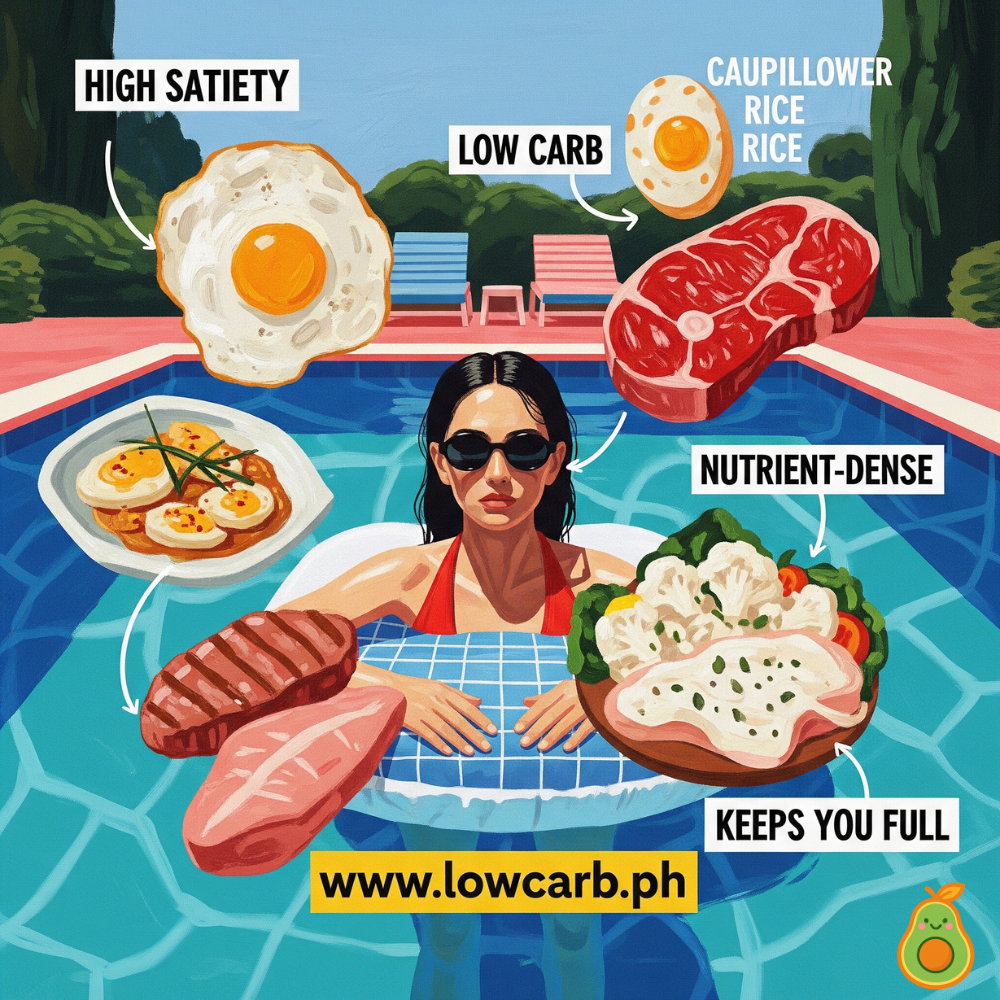
| Eggs (boiled or fried in butter) | High-quality protein plus natural fat; one of the highest satiety-per-calorie foods available |
| Fried meat with vegetables (pork with string beans, beef with cabbage) | Protein and fiber together increase satiety far more than either alone |
| Airfried pork with vegetables | High protein, low carb, and genuinely filling without needing breading |
| Steamed fish (bangus, tilapia, salmon) | Lean protein that’s often underrated for how filling it actually is |
| Cabbage rice (sautéed in butter with garlic) | Mimics rice texture while keeping carbs and insulin low |
| Cauliflower rice | Adds bulk, keeps insulin stable, and avoids the post-meal sleepiness rice causes |
| Broccoli rice | High fiber and very filling, especially useful for post-meal glucose control |
Almonds work too, but portion control matters more here than with the foods above, since they’re calorie-dense and easy to overeat. I cap clients around 20 to 25 almonds as a snack, not a handful eaten mindlessly. Coconut flour pancakes, cooked in butter or coconut oil, are also a reasonable bread replacement for beginners who struggle giving up pandesal outright.
Yes, and both can genuinely help. Black coffee suppresses appetite mildly through caffeine, and it can extend the gap between meals without adding calories. See black coffee on a low carb diet for the details on timing it right. Plain water and electrolyte-balanced drinks matter too, since dehydration is often mistaken for hunger, especially in the first couple of weeks of carb reduction.
A consistent pattern shows up across clients with obesity, type 2 diabetes, hypertension, and PCOS. When meals get built around protein, natural fat, and fiber-rich vegetables, hunger drops without anyone needing to count calories. Waist circumference tends to move in the right direction too, energy improves, and clients stop white-knuckling their way through the day. Food choice does more work here than calorie restriction alone ever did for these same clients.
The core approach stays the same: protein, fat, and fiber. But a few things deserve extra attention depending on your condition. For type 2 diabetes, leaning on eggs, fish, leafy vegetables, and cauliflower rice supports the glycemic control benefits well documented in low carb research. A widely cited 2015 review in the journal Nutrition, led by Feinman and colleagues, covers carbohydrate restriction as a first-line diabetes strategy in depth. For hypertension, cutting processed foods and sugary drinks while increasing whole protein and potassium-rich vegetables supports blood pressure alongside any weight loss that occurs. See can a low carb diet lower blood pressure for the full picture. For PCOS, insulin resistance is usually the root issue. So the same eggs, fish, meat, and vegetable-forward approach tends to help with both satiety and the underlying hormonal picture.
If you want a concrete example of the egg effect specifically, a randomized trial published in the International Journal of Obesity found something striking. People who ate two eggs for breakfast lost significantly more weight over 8 weeks than those eating a calorie-matched bagel breakfast. That happened largely because the egg breakfast kept them fuller for longer.
Instead of a cup of rice, a small piece of meat, and a sweet sauce, build your plate differently. Go with a palm-sized portion of protein, one to two cups of vegetables, and a natural fat like butter, coconut oil, or olive oil. A fried egg with sautéed cabbage, pork belly with cauliflower rice, or steamed fish with broccoli rice all fit that same simple structure. It’s not complicated, and it doesn’t need to be.
Usually because the calories are coming from the wrong sources, more processed keto snacks or nuts than actual protein and vegetables. Rebuild the meal around a real protein source and fiber-rich vegetables first, and the hunger usually resolves within a day or two.
Not typically for satiety itself. Protein is the most filling macronutrient by a wide margin. But extremely high protein intake without enough fat or vegetables can feel unbalanced and harder to sustain long term. So aim for a plate that includes all three.
Both genuinely add fiber and volume, which does contribute real physical fullness, not just a mental trick. They work best paired with a real protein and fat source rather than eaten alone.
Most clients notice a real difference within the first few days once meals are properly structured around protein, fat, and vegetables. Full metabolic adaptation, where cravings drop off almost entirely, usually takes one to three weeks.
The most filling low carb foods aren’t exotic. Eggs, meat, fish, vegetables, and natural fats do the job when they’re actually the center of the plate, not an afterthought next to rice. For the ingredients that make this easy to build daily, browse our organic low carb store.
This article is for educational purposes only and does not replace individualized medical advice. Consult a qualified healthcare professional before making significant changes to your diet, especially if you have diabetes, hypertension, or another metabolic condition.
About the author: Coach Den
Coach Den is a nutritionist and low carb coach based in Metro Manila who has spent 10 years helping Filipinos lower their blood sugar, lose weight, and get off the rice-and-soda cycle with food they can buy at the palengke. Read how we research and update articles in our editorial policy.
This article is for general education and is not medical advice. Talk to your doctor before changing your diet, especially if you take medicine for diabetes or blood pressure. See our medical disclaimer.