

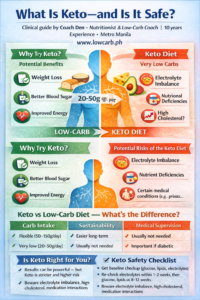
A clinical guide by Coach Den — Nutritionist & Low Carb Coach, 10 years experience, Metro Manila
If you search online for weight loss or diabetes reversal, you will inevitably encounter the ketogenic diet, commonly called keto. Some people call it a metabolic miracle. Others warn that it’s dangerous.
So which is it?
After more than a decade working with overweight clients, diabetics, and people struggling with metabolic syndrome in Metro Manila, my answer is simple:
Keto can work — but it is not always the best long-term approach for everyone.
In many cases, a moderate low carb diet is safer, easier to sustain, and delivers the same benefits.
This article will explain:
What the ketogenic diet really is
How keto works biologically
The difference between keto vs low carb diets
Whether keto is actually safe
Who should avoid it
Why I usually recommend low carb instead of strict keto
For the foundational principles behind carbohydrate restriction, read my full pillar guide:
This article expands on that guide by focusing specifically on the ketogenic diet.
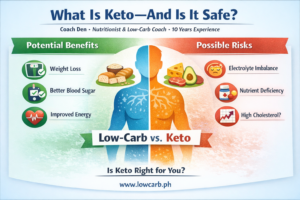
The ketogenic diet is a very low carbohydrate diet designed to force the body into a metabolic state called nutritional ketosis.
Normally the body runs primarily on glucose (sugar) derived from carbohydrates.
When carbohydrates drop dramatically — usually below about 20–50 grams per day — the liver begins converting fat into ketones, which become the body’s alternative fuel source.
These ketones include:
Beta-hydroxybutyrate
Acetoacetate
Acetone
Once ketones rise in the bloodstream, the body transitions into fat-burning mode.
This is why keto often leads to rapid weight loss and lower blood sugar levels.
The ketogenic diet actually started as a medical therapy, not a weight-loss trend.
Historically it was used to treat drug-resistant epilepsy, particularly in children.
But in the last decade, research has shown keto may also help improve:
Type 2 diabetes
Insulin resistance
Obesity
Metabolic syndrome
Multiple clinical studies show that ketogenic diets can improve blood sugar control, body weight, and lipid profiles in people with type 2 diabetes.
Another systematic review found low carb and ketogenic diets significantly reduced:
HbA1c
Body weight
BMI
Blood pressure
In some cases, diabetes remission reached 62% after one year.
These results explain why keto gained enormous attention online.
However — this does not automatically mean keto is the best option for everyone.
To understand keto, we must understand fuel switching.
Your body has two main energy systems:
Uses carbohydrates as the main energy source.
Typical modern diets run almost entirely on glucose.
When carbs drop low enough, the body shifts to burning fat and producing ketones.
This metabolic shift produces several effects:
Lower insulin levels
When carbohydrates drop, insulin drops as well.
Lower insulin allows stored fat to be released and burned.
Reduced hunger
Many people naturally eat fewer calories because fat and protein are more filling.
Stable blood sugar
Without constant carb intake, glucose spikes become smaller.
This is particularly helpful for people with type 2 diabetes or insulin resistance.
This is where many people get confused.
Keto is NOT the same as low carb.
Keto is actually just one extreme form of low carb dieting.
Typical carbohydrate intake:
50–150 g carbs/day
Characteristics:
Moderate carbohydrate restriction
Plenty of vegetables
Sustainable long-term
Easier socially
Typical carbohydrate intake:
20–50 g carbs/day
Characteristics:
Extremely low carbs
Requires strict tracking
Higher fat intake
Harder to sustain
In other words:
All keto diets are low carb, but not all low carb diets are keto.
This is exactly why on lowcarb.ph, I focus primarily on low carb lifestyle strategies, not strict keto.
The honest answer:
Keto can be safe — but only when done properly and for the right person.
Research shows ketogenic diets can improve metabolic health markers such as:
Blood glucose
Triglycerides
HDL cholesterol
Weight loss
However, keto also carries potential risks.
These risks are often ignored by social media influencers.
One of the most common problems when starting keto is rapid electrolyte loss.
When carbohydrates are reduced, the body quickly depletes glycogen stores.
Glycogen holds water.
When glycogen disappears, water and electrolytes are lost as well.
This can cause symptoms such as:
dizziness
palpitations
fatigue
muscle cramps
headaches
In my coaching experience, most keto failures happen in the first 30 days because people are not replacing electrolytes.
The three most important minerals to monitor are:
Sodium
Needed to maintain blood pressure and fluid balance.
Critical for heart rhythm and nerve signaling.
Magnesium
Essential for muscle relaxation and preventing cramps.
A well-designed low carb or ketogenic diet should include:
mineral-rich foods
leafy vegetables
proper hydration
sometimes magnesium or potassium supplementation
Strict keto eliminates many foods including:
fruits
legumes
certain vegetables
whole grains
Because of this restriction, some studies show lower intake of fiber and key micronutrients on ketogenic diets.
This is another reason I prefer moderate low carb rather than extreme keto for long-term health.
Some individuals experience increases in LDL cholesterol when eating very high amounts of fat.
Studies show keto may improve triglycerides and HDL, but LDL can increase in some people.
This is why lipid monitoring is important.
Keto can rapidly lower blood sugar.
That sounds good — but it can be dangerous for people taking diabetes medication.
For example:
insulin
sulfonylureas
These medications can cause hypoglycemia if carbs suddenly drop.
Anyone with diabetes should work with a healthcare professional when starting keto or low carb.
A published case study described a patient with long-standing diabetes who adopted a ketogenic diet.
After sustained keto therapy:
HbA1c dropped to 5.5%
insulin requirements decreased by 43%
blood glucose remained stable within target ranges
This illustrates the power of carbohydrate restriction for improving metabolic disease.
However, the same case also showed LDL cholesterol increased, demonstrating why careful monitoring is necessary.
While keto can help some people, it is not appropriate for everyone.
Individuals who should avoid or use extreme caution include:
pregnant women
people with eating disorders
patients with severe kidney disease
people with certain metabolic disorders
In these cases, moderate low carb approaches are safer.
After coaching hundreds of clients over the past decade, I’ve noticed something important:
Most people do not need ketosis to get healthy.
They simply need to reduce refined carbohydrates.
Many of my clients achieve dramatic improvements using moderate low carb diets.
Benefits often include:
weight loss
lower blood sugar
reduced blood pressure
improved energy
But without the strict limitations of keto.
For many Filipinos, moderate low carb also allows cultural flexibility — including small portions of rice when necessary.
This approach improves long term sustainability, which matters far more than short-term results.
Whether someone follows keto or moderate low carb, certain nutrients become especially important.
Vitamin D deficiency is extremely common worldwide.
Low vitamin D levels are associated with:
insulin resistance
metabolic syndrome
cardiovascular disease
Vitamin K2 works synergistically with vitamin D3 by helping direct calcium into bones rather than arteries.
Together, D3 + K2 support metabolic and cardiovascular health.
Potassium regulates:
nerve signaling
heart rhythm
blood pressure
Low carb diets often increase potassium needs because insulin levels drop and the kidneys excrete more sodium and water.
Foods rich in potassium include:
avocado
spinach
mushrooms
leafy greens
Magnesium is one of the most common nutrient deficiencies.
Symptoms of low magnesium include:
muscle cramps
fatigue
headaches
poor sleep
Magnesium is particularly helpful during the first weeks of carbohydrate restriction.
If someone is curious about keto, I usually recommend starting with a moderate low carb diet first.
Practical steps include:
Eliminate sugary drinks
Reduce refined carbohydrates
Replace rice and bread with vegetables
Increase protein intake
Include healthy fats from whole foods
Many people see major improvements without needing to reach ketosis.
The ketogenic diet is powerful.
But it is not magic.
For some individuals — particularly those with severe insulin resistance — keto can provide dramatic metabolic benefits.
However, strict keto also introduces challenges such as:
nutrient deficiencies
electrolyte imbalances
sustainability issues
That is why I usually recommend a balanced low carb lifestyle instead of extreme keto.
A properly designed low carb diet can deliver most of the benefits while remaining easier to maintain long-term.
If you want to learn the complete system I teach my clients, start with my full guide:
That article explains how to implement low carb safely and sustainably.
Coach Den
Nutritionist & Low Carb Coach
10 years experience — Metro Manila
Helping Filipinos reverse metabolic disease using sustainable nutrition strategies.



A Researcher’s Evidence-Based Review + Real Case Data + 4-Week
The Complete Filipino Guide to Weight Loss, Hypertension Control, Diabetes
If you’ve ever tried dieting in the Philippines, you know
List of Low Carb Foods (Complete Beginner Guide for Filipinos)
5 Responses