
By Coach Den, nutritionist and low carb coach · Last updated: October 28, 2026
Most people start keto for weight loss. Few understand what’s actually happening inside their body while it works, and that gap is usually why results stall or the diet feels harder than it should. Once you understand the mechanism instead of just the meal plan, you get better results with fewer side effects.
This is a deep dive into the biology. For the broader picture, start with what is a low carb diet. For whether keto itself is safe for you specifically, read what is keto, and is it safe.
In my coaching practice, I define keto by two measurable markers: 20 grams of net carbs a day or less, and blood ketones at or above 0.5 mmol/L. That second number is what actually confirms the metabolic shift happened, not just the diet plan on paper.
For Filipinos coming from a rice-heavy diet, dropping straight to 20g can feel brutal, so I transition most clients into it gradually instead. The reason 20g matters specifically is that it reliably lowers insulin enough to force a change in fuel source, and that’s the real mechanism worth understanding.
Here’s how I explain it to clients: your body runs on two fuel tanks. Tank one is glucose, from rice, bread, and sugar. It’s quick-access, but small, and it empties fast. Tank two is stored body fat, your long-term reserve. Most people are sitting on months, sometimes years, of fuel in that second tank without touching it.
Eat rice three times a day and you keep refilling tank one. So as long as glucose is available, your body has no reason to touch stored fat. Keto works by emptying tank one consistently instead. Once carbs drop to around 20g net, blood sugar stabilizes, insulin drops, and your body gets forced into tank two. The liver then starts producing ketones from that stored fat, a process called nutritional ketosis.
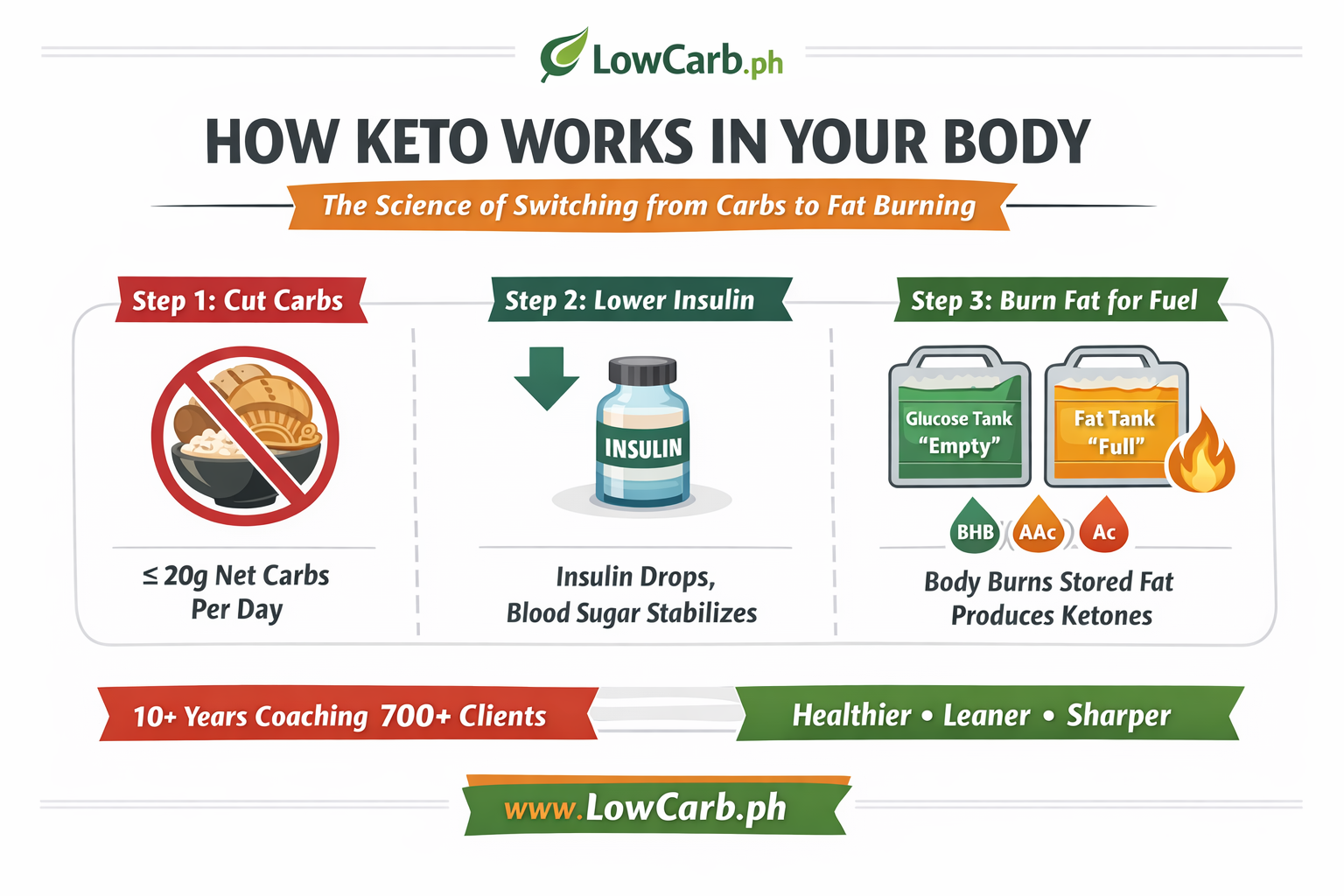
The real driver behind keto isn’t fat. It’s insulin control. When insulin runs high, fat burning gets blocked, fat storage gets activated, hunger increases, and blood sugar swings around. When insulin drops, fat cells release stored energy, the liver converts fatty acids into ketones, and your brain adapts to running on those ketones instead. Appetite tends to fall on its own as a side effect of that shift.
This is exactly why keto is more than “low carb, but stricter.” As I cover in the pillar guide, keto is a version of low carb designed specifically to suppress insulin more aggressively than a moderate approach would.
Once carbs are restricted, the sequence runs roughly like this. Glycogen stores deplete over 24 to 48 hours, insulin decreases, and fat breakdown increases. The liver then converts fatty acids into three main ketones: beta-hydroxybutyrate (BHB), acetoacetate, and acetone. In practice, I use blood ketones at or above 0.5 mmol/L as the marker that this shift has actually happened, not just that someone is eating fewer carbs on paper.
This lines up with the broader research on ketogenic metabolism. A widely cited review by Paoli, Rubini, Volek and colleagues, European Journal of Clinical Nutrition, 2013, walks through this same physiological ketosis pathway. It covers the downstream effects on metabolic health in more depth than I can here.
One of the most consistent patterns I’ve seen across my client base: appetite suppression within 7 to 14 days, without anyone trying to white-knuckle through hunger. Stable blood sugar, lower insulin spikes, the appetite-regulating effects of ketones themselves, and higher protein intake all stack together here. Clients often tell me some version of “I’m not even trying to fast, I just don’t feel hungry anymore.” That’s metabolic efficiency doing the work, not willpower.
In my clinical observation, the timeline tends to follow a pattern. Days one through three bring carb withdrawal, headaches, and fatigue. Days three through seven are the classic “keto flu” window: electrolyte loss, water weight dropping fast, and a rapid improvement in fasting blood sugar. By days seven through fourteen, most clients report appetite reduction, sharper mental clarity, and steadier energy.
Some people develop a keto rash or muscle cramps during that adjustment window. In roughly 90% of the cases I’ve coached through, the cause traces back to electrolyte imbalance, specifically not enough sodium, potassium, or magnesium in the diet. If you want the full picture on why electrolytes cause so many people to quit early, see why people quit low carb and potassium and low carb diet benefits. Real, mineral-rich food does most of the work here, and we deliver organic versions of the leafy greens and vegetables that help through our produce store.
| Marker | What I typically see |
|---|---|
| Fasting blood sugar | Often drops within 3 to 7 days |
| HbA1c | Noticeable improvement in 60 to 90 days |
| Triglycerides | Significant reduction, especially in previously high-carb eaters |
| HDL cholesterol | Often increases |
| ALT/AST (fatty liver markers) | Improve as insulin drops, usually slower than the others |
| Blood pressure | Often improves alongside weight loss and lower insulin, see can a low carb diet lower blood pressure |
One client, a 29-year-old woman managing type 2 diabetes, combined daily walking with a 20g net carb keto approach. Within 60 days her fasting glucose normalized, triglycerides came down, HbA1c improved significantly, and blood pressure returned to a normal range. Her fatty liver markers moved slower, which is typical, but the overall metabolic shift was still dramatic. That’s the insulin-resistance mechanism working directly, since none of it happens by coincidence.
Too much fat. Keto isn’t “drink butter coffee all day.” If you overdo the fat intake, your body burns dietary fat instead of digging into body fat, which defeats the point.
Not enough electrolytes. This is the single biggest cause of headaches, fatigue, cramps, and keto flu symptoms in the first two weeks.
Ignoring protein. Protein matters for muscle retention, satiety, and overall metabolic health. Keto should be moderate protein, not low protein.
| Approach | Carbs | Ketones | Primary goal |
|---|---|---|---|
| Low carb | 50 to 100g | Not required | Blood sugar control |
| Keto | 20g or less | 0.5 mmol/L or higher | Fat adaptation |
I think of keto less as a diet trend and more as a therapeutic metabolic intervention, one that works through a specific, measurable mechanism rather than general willpower.
Not everyone should jump into this mechanism without medical guidance. That especially includes people with kidney disease, advanced liver disease, pregnancy, or anyone on insulin or glucose-lowering medication. For the full breakdown of who should avoid keto and why, see what is keto, and is it safe. Once your metabolic markers stabilize, most people don’t need to stay in strict ketosis forever. I cover exactly when to transition in how long you should stay on keto.
Keto works by lowering insulin enough to shift your body from burning glucose to burning stored fat, producing ketones as the alternative fuel along the way. Everything else, the appetite drop, the lab improvements, the fat loss, flows from that one switch.
This article is for educational purposes and does not replace medical advice. If you have a medical condition or take medication, talk to your doctor before starting a ketogenic or low carb diet.
About the author: Coach Den
Coach Den is a nutritionist and low carb coach based in Metro Manila who has spent 10 years helping Filipinos lower their blood sugar, lose weight, and get off the rice-and-soda cycle with food they can buy at the palengke. Read how we research and update articles in our editorial policy.
This article is for general education and is not medical advice. Talk to your doctor before changing your diet, especially if you take medicine for diabetes or blood pressure. See our medical disclaimer.