
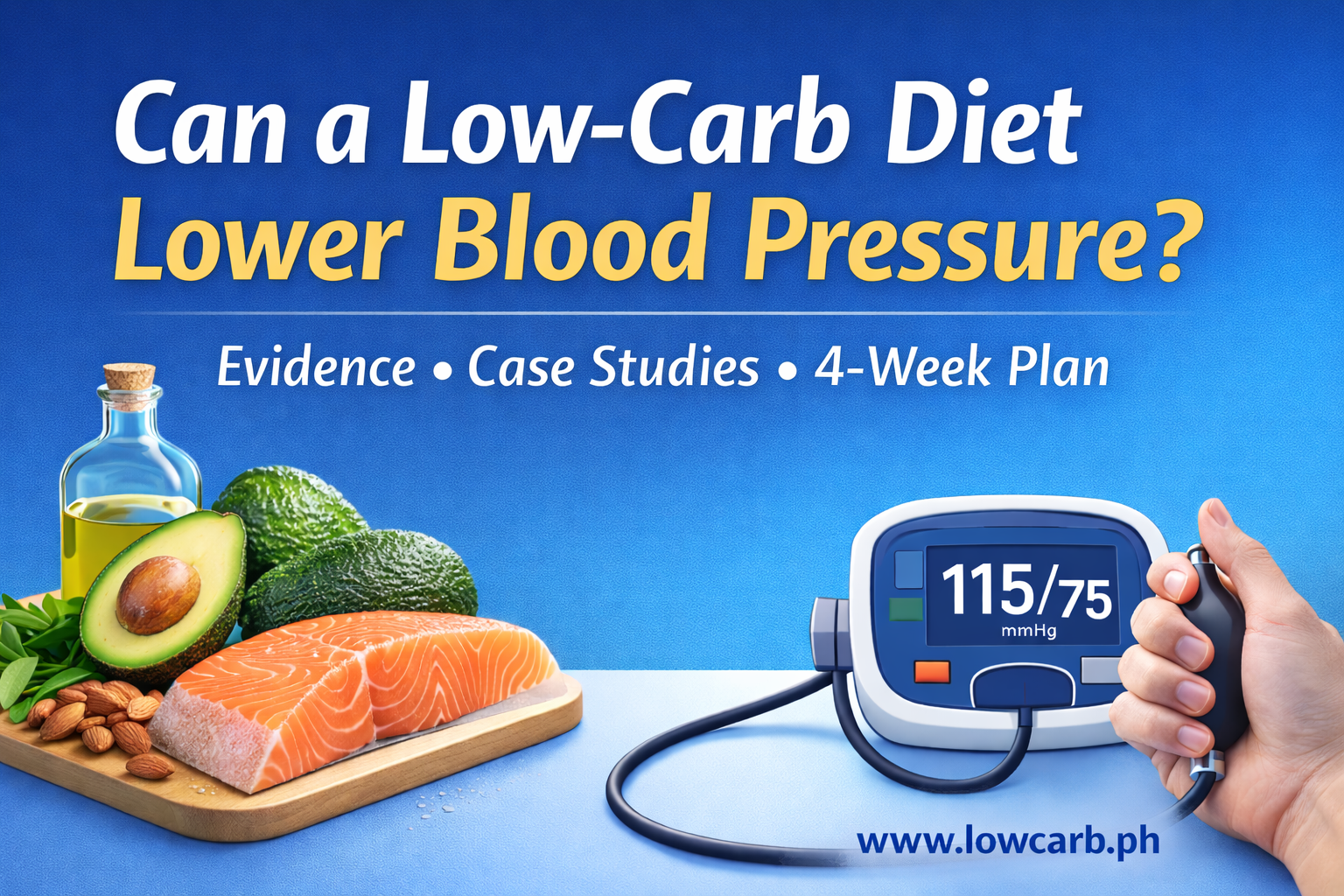

The Complete Filipino Guide to Weight Loss, Hypertension Control, Diabetes Improvement & PCOS Support
If you’re a Filipino professional struggling with:
Weight gain
Rising blood pressure
Pre-diabetes or Type 2 diabetes
PCOS and fertility issues
Fatty liver
Constant fatigue
Then you are asking the right question:
What is a low carb diet — and can it really help?
I once stood where you are.
At 95kg, dealing with metabolic warning signs and seeing people around me develop hypertension and diabetes, I knew I had to understand what was truly happening inside the body.
One year later:
95kg → 68kg.
No calorie counting.
No starvation.
No extreme cardio.
Just structured low carbohydrate nutrition — later combined with intermittent fasting.
This article is your definitive Filipino guide.
If you’re new here, explore more structured guides at
👉 Low Carb Ph
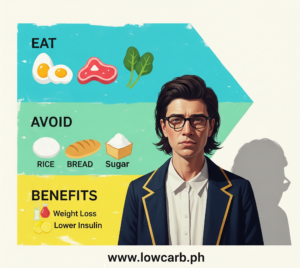
A low carbohydrate diet reduces carbohydrate intake and prioritizes:
Protein (eggs, meat, fish)
Healthy fats (butter, coconut oil, olive oil, animal fats)
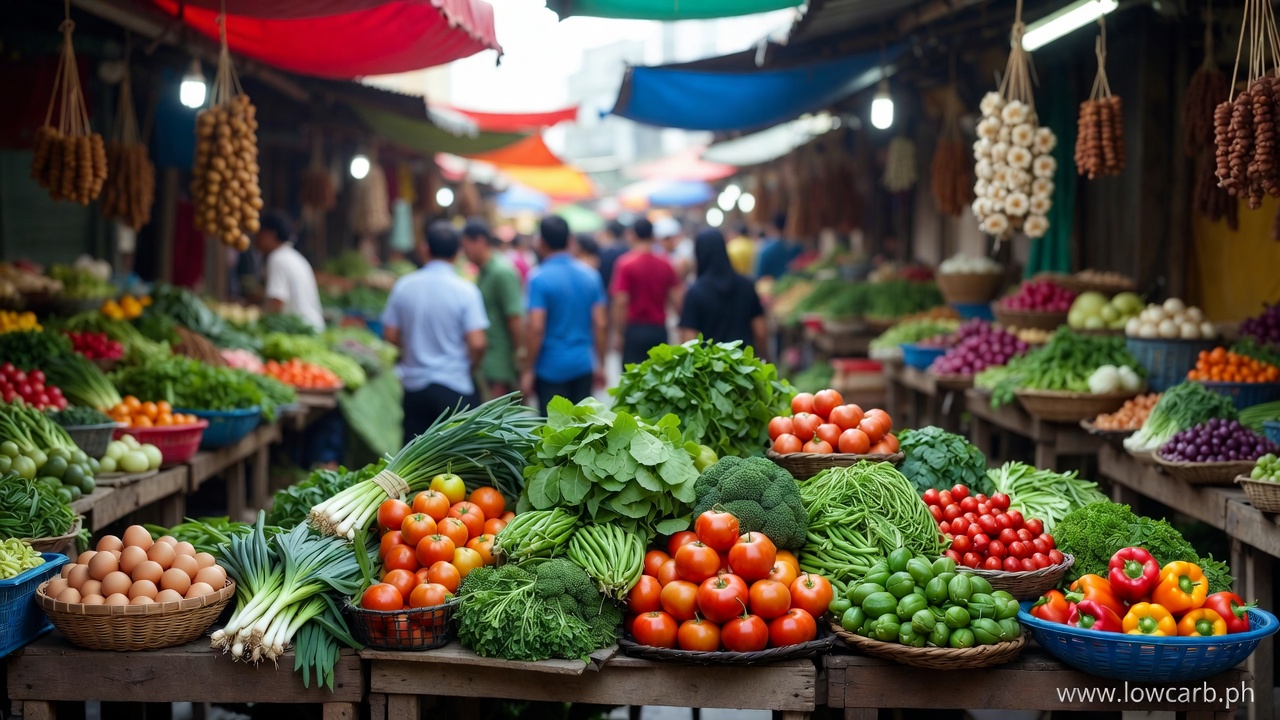
Non-starchy vegetables (kangkong, pechay, malunggay, spinach, cabbage)
It minimizes:
White rice
Bread (pandesal)
Sugar
Cakes
Root crops
Ultra-processed foods
Seed oils (canola, sunflower, palm blends, safflower and many more)
The purpose is simple:
👉 Lower insulin.
And insulin is the real driver of fat storage, insulin resistance, and many metabolic diseases.
When you eat carbohydrates:
Carbs → Glucose → Insulin spike
Insulin does 4 major things:
Stores fat
Blocks fat burning
Promotes sodium retention (affecting blood pressure)
Drives insulin resistance over time
This concept is supported by research such as the carbohydrate-insulin model discussed by David S. Ludwig in JAMA Internal Medicine (2018), which explains insulin’s central role in fat storage and obesity progression.
When insulin remains elevated chronically:
Fat accumulates
Blood sugar dysregulates
Blood pressure rises
Hormonal imbalance worsens (PCOS)
Lower carbohydrate intake reduces insulin demand.
Lower insulin allows fat burning.
I began with lazy low carb:
Removed rice
Removed sweets
Increased protein
Focused on eggs daily
But I made a mistake.
I did not combine it with intermittent fasting early.
Once I added fasting (16:8), fat loss accelerated.
Within 12 months:
27kg lost
Cravings disappeared
Energy stabilized
Mental clarity improved
Blood markers normalized
The real transformation was metabolic, not cosmetic.
That experience led me to build https://www.lowcarb.ph to educate Filipinos using science-backed evidence and practical application.

Low carb is not a fad.
It has been studied for decades.
A randomized trial published in Annals of Internal Medicine showed that low-carbohydrate diets resulted in greater fat loss and improved cardiovascular markers compared to low-fat diets (Bazzano et al., 2014).
A one-year clinical trial led by Sarah Hallberg demonstrated significant HbA1c reduction and reduced diabetes medication dependence using a low-carbohydrate approach (Hallberg et al., Diabetes Therapy, 2018).
Meta-analysis in Archives of Internal Medicine (Nordmann et al., 2006) showed low-carb diets improved triglycerides and blood pressure markers.
Contrary to myths, long-term research in American Journal of Clinical Nutrition (Brinkworth et al., 2010) found no adverse kidney effects in overweight adults without existing kidney disease.
Research by Eric Westman and colleagues demonstrated improvement in weight and hormonal markers in women with PCOS on ketogenic diets (Nutrition & Metabolism, 2005).
The evidence is consistent:
Lower carbohydrate intake improves metabolic markers in insulin-resistant populations.
Based on my experience helping people close to me:
Sedentary lifestyle
High stress
High rice intake
Fast food dependency
Low carb stabilizes energy and reduces cravings.
Many people I guided saw:
140/90 → 120–130/80
Insulin influences sodium retention and vascular stiffness.
Lower insulin often correlates with improved BP.
Type 2 diabetes is primarily insulin resistance.
Reducing carbohydrates reduces glucose load.
Lower glucose = lower insulin demand.
PCOS is strongly tied to insulin resistance.
Lowering insulin improves:
Ovulation
Hormonal regulation
Weight management
Fertility potential
Start: 89kg
Duration: 6 months
Current: 65kg
BP improved from 140/90 → 125/80.
Approach:
Moderate → strict low carb
Eggs daily
Grass-fed meat
No rice
Leafy vegetables
24kg lost.
Start: 75kg
3 months → 64kg
Removed:
Bread
Sweets
Processed snacks
Added:
Protein-focused meals
Leafy greens
Proper cooking fats
Improved hormonal stability and confidence.
Start: 95kg
8 months → 73kg
BP from 145/90 → 130/80.
Transition:
Lazy low carb → strict keto → carnivore-focused.
22kg lost.
Improved mental clarity.
I use a progression model:
Remove:
Rice
Sugar
Bread
Focus on protein.
Eggs.
Grass-fed meat.
Green vegetables.
No calorie counting.
Protein-first approach.
Return to moderate low carb after goal weight.
White rice
Pandesal
Root crops (ex: kamote, gabi, patatas, cassava)
Cakes & sweets
Processed foods (ex: hotdogs, sausage, meatloaf)
Seed oils (canola, sunflower, palm blends, safflower and many more)
(we will tackle all the unhealthy cooking oils in a separate article)
Eggs (most affordable protein)
Pork
Chicken
Beef
Fish
Kangkong
Pechay
Malunggay
Spinach
Coconut oil
Butter
(Almost all the vegetables in Bahay Kubo song are good)
Low carb in the Philippines is not expensive.
Removing junk saves money.


Evidence shows no kidney damage in healthy individuals without pre-existing disease (Brinkworth et al., 2010).
High blood sugar is more damaging to kidneys than protein.
The body can use:
Glucose
Fat
Ketones
Fat provides stable energy without crashes.
Insulin drives fat storage.
Dietary fat does not spike insulin significantly.
Eggs are cheaper than fast food.
Vegetables are widely available locally.
Not eating enough fat
Not tracking carbs initially
Using seed oils
Ignoring leafy greens
Overeating “keto snacks”
Not pairing with intermittent fasting
After adaptation:
Add 16:8 fasting.
Benefits:
Improved insulin sensitivity
Faster fat burning
Mental clarity
Reduced cravings
This combination accelerated my transformation.
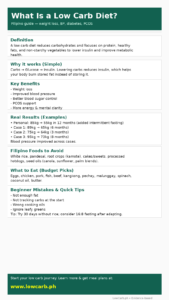
Low carb improves:
Blood pressure
Blood sugar
Energy stability
Mental clarity
Confidence
Productivity
This is metabolic rehabilitation — not dieting.
Join the email list
Download beginner meal plan
Remove rice for 30 days
Focus on eggs + leafy greens
Consider adding fasting
Explore structured guides at
👉 https://www.lowcarb.ph


A Researcher’s Evidence-Based Review + Real Case Data + 4-Week
The Complete Filipino Guide to Weight Loss, Hypertension Control, Diabetes
If you’ve ever tried dieting in the Philippines, you know
List of Low Carb Foods (Complete Beginner Guide for Filipinos)
14 Responses