
By Coach Den, nutritionist and low carb coach · Last updated: October 28, 2026
Cloves are one of the most powerful spices in a Filipino kitchen. A small amount completely changes the aroma and flavor of a dish. But if you’ve ever stood in a grocery aisle trying to buy them, you’ve probably noticed something confusing: they don’t always sit on the shelf labeled simply “cloves.”
After coaching hundreds of clients through the transition to low carb, I recommend natural spices like cloves constantly. They add real flavor without a gram of sugar or a carb-heavy sauce behind them. So this guide covers exactly where to buy them in the Philippines, what to look for, and the mistakes that waste your money on cloves that have already lost their punch.
You have more options than the supermarket spice aisle, and several of them give you fresher cloves for less money.
| Source | Why it’s worth checking |
|---|---|
| Local wet market (palengke) | Often the freshest and cheapest single-purchase option |
| Supermarket or grocery store | Convenient, easy to compare brands |
| Specialty spice shops | Higher chance of premium grade and origin info |
| Health food or natural stores | Organic options more likely to be available |
| Online marketplaces | Wide selection, but verify seller reviews first |
| Bulk wholesalers | Best pricing if you cook in volume |
| Farmers markets | Direct from growers, though rare for cloves specifically |
For most home cooks, I point clients toward the palengke first. Then, if they want a specific origin or a more consistent grade batch to batch, a specialty spice shop is the better move.
Shoppers often walk right past cloves because the label uses a different name or language. Watch for clove or clove bud, clove buds, clavo de olor (Spanish), laung or लौंग (Hindi and Urdu), cengkeh or cengkeh kering (Indonesian and Malay), Syzygium aromaticum (the scientific name), and clove oil for the liquid extract. This matters more when you’re buying from an import shop, though, or an online seller stocking Southeast Asian and South Asian ingredients side by side.
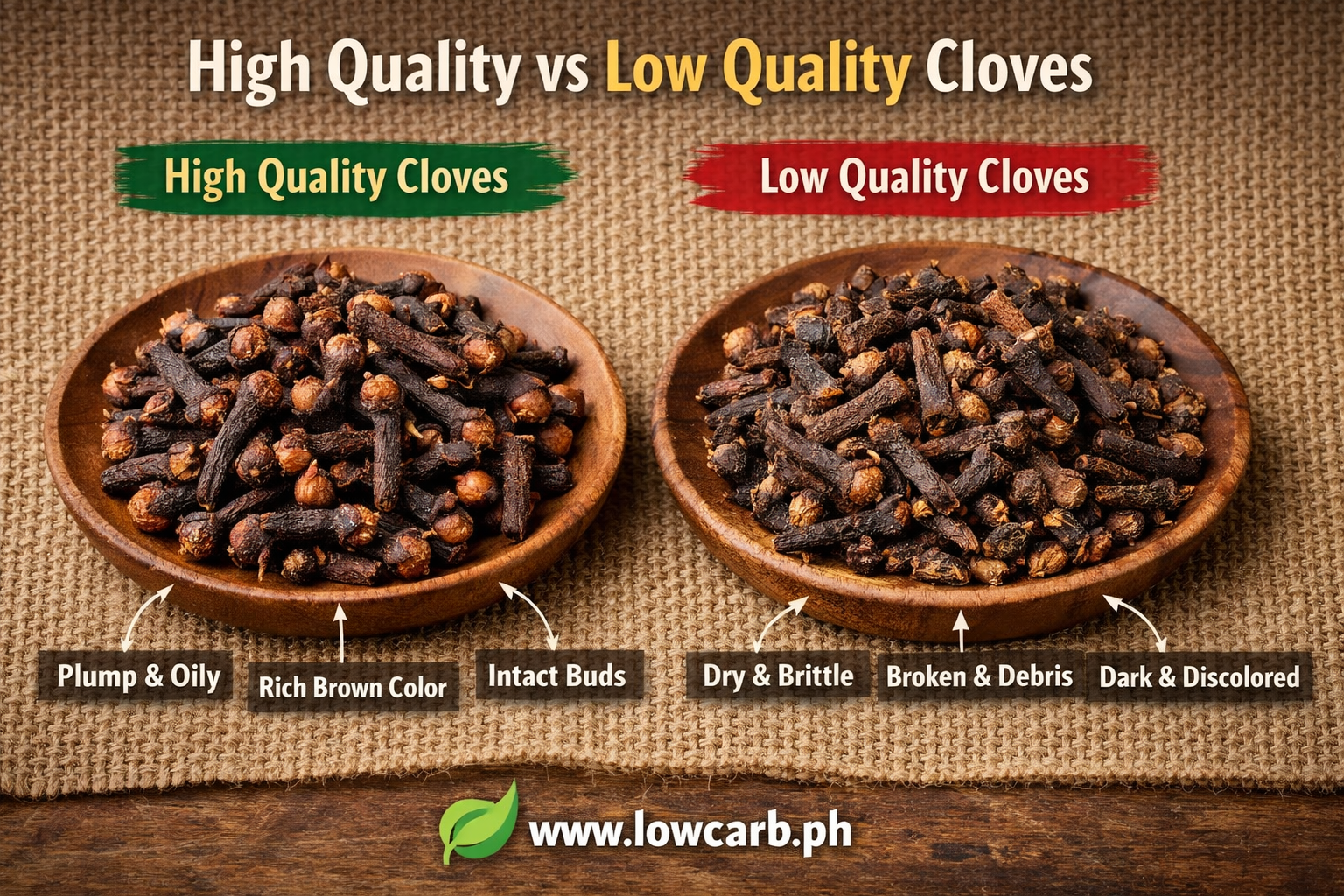
Run four quick checks before you buy: look, smell, crush, and taste. Together they take about ten seconds and save you from a jar of flavorless spice.
| Test | High quality | Low quality |
|---|---|---|
| Look | Plump, intact buds, deep brown to mahogany, slight oily sheen | Broken pieces, dust, gray or black patches |
| Smell | Strong, sweet-spicy scent with a clear eugenol note | Weak, flat, or musty smell |
| Crush | Releases oily residue between your fingers | Dry, brittle, little to no aroma released |
| Taste | Intensely spicy-sweet, slightly numbing | Mild, bland, or oddly sour |
Buy whole, then grind what you need right before cooking. Whole buds keep their volatile oils for up to 2 to 3 years when stored airtight, cool, and dark. Ground cloves, though, lose their aroma fast. That often happens within just a few months, since grinding exposes far more surface area to air and light.
Store whole cloves in an airtight container. A glass jar with a tight lid works well. Keep it in a cool, dark place too, away from heat and direct sunlight. If you do buy pre-ground cloves, plan to use them within 3 to 6 months for the best aroma, since that clock starts ticking the moment they’re ground.
Yes, and it changes the flavor profile more than most people expect. Indonesian cloves, especially from the Maluku Islands or Java, carry the classic deep, sweet, robust eugenol note most cooks associate with clove flavor. Zanzibar cloves from Tanzania lean warmer, with slightly fruity notes. Madagascar and Comoros cloves are more aromatic still, and they often show up at specialty suppliers rather than general grocery stores. None of these are wrong choices. But if a recipe tastes flat compared to what you remember, the origin might be why.
More often than most people realize. Cloves are a quiet staple in adobo, mechado, and menudo, usually just two or three whole buds simmered into the sauce, not eaten directly. They also show up in humba, some versions of caldereta, and holiday hams. None of these dishes taste “clove-forward.” The spice works in the background instead, rounding out the sweetness and cutting through the fat. That’s exactly why a stale, weak clove disappears completely, while a fresh one still comes through.
For low carb cooking specifically, this background role matters. You don’t need a sugar-heavy glaze to get that rounded, warm flavor in a braised dish. Two fresh cloves do more work than a tablespoon of brown sugar ever did, and they cost you nothing in net carbs.
Most home cooks overbuy, then let half the jar go stale before it’s used.
| Use case | Amount |
|---|---|
| Home cook, occasional use | 25 to 50 grams |
| Regular cook, small household | 100 to 250 grams |
| Caterer or product maker | 1 kilogram or more |
Most home cooks only need a pinch to half a teaspoon per recipe. So a 25 to 50 gram bag genuinely lasts most households a long time when stored properly.
Yes, and most cooks already do this without thinking about it. Cloves pair naturally with cinnamon, star anise, and bay leaf in slow-braised dishes. That same trio also works well in the warm spice infusions I recommend for managing cravings during a fast. So you don’t need a specialty five-spice blend to get the effect. Buying the individual whole spices separately actually gives you more control over the ratio, and it usually costs less than a pre-mixed jar from the same brand.
That last one deserves more than a bullet point. Clove oil is highly concentrated, and it should not be swallowed in meaningful amounts without medical advice. Case reports in the medical literature describe real liver and kidney injury from eugenol overdose, particularly in children who ingested clove oil accidentally. Culinary use of whole or ground cloves in food is a completely different situation, and it’s considered safe. Still, the concentrated oil deserves real caution. You can read the toxicity details in this clinical review of eugenol.
One client used a warm spice infusion of cinnamon and one to two cloves steeped in hot water, no sugar added, to manage evening cravings. She sourced Indonesian-origin cloves from a specialty spice shop, mainly because the flavor held up better than what she’d bought at the supermarket before.
Another home cook uses cloves sparingly in low carb baked goods, around 0.125 to 0.25 teaspoon per batch. That’s enough to replicate the warmth of traditional dessert spices without leaning on sugar to carry the flavor. Meanwhile, a meal-prep business owner I worked with buys a 5-kilogram bulk lot from a trusted wholesaler. She then portions and vacuum-seals it before refrigerating, which keeps a large batch fresh far longer than a single open bag ever would.
Cloves carry essentially zero net carbs. That makes them one of the easiest wins if you’re building flavor into a low carb diet. The same goes for staying strict enough for a ketogenic diet without reaching for sugar-based flavorings. If bland food is part of why past attempts didn’t stick, spices like this are worth taking seriously. See my full breakdown of why people quit low carb for the other common failure points.
Yes, but use about half the amount, since pre-ground cloves are more concentrated in the moment but fade fast in storage. Freshly ground whole cloves will always taste stronger than a jar that’s been sitting ground for weeks.
Often, yes. Organic typically means fewer pesticide residues and better traceability back to the farm. That can matter if you’re buying whole spices in bulk regularly.
Yes. Their potent aroma makes them excellent in low carb spiced syrups sweetened with erythritol or stevia instead of sugar, especially for holiday flavors.
There’s real research on this specifically, enough that it deserves its own answer rather than a quick FAQ line. I cover the science, safety, and practical use in can cloves lower blood pressure.
Good cloves are cheap insurance against bland low carb cooking. Buy whole, check them before you pay, store them properly, and you’ll get years of use out of a single small bag. For more Filipino ingredients that fit a low carb kitchen, browse our organic low carb store.
This article is for informational and culinary guidance only and does not replace medical treatment. Clove oil is highly concentrated and should not be used internally without medical advice.
About the author: Coach Den
Coach Den is a nutritionist and low carb coach based in Metro Manila who has spent 10 years helping Filipinos lower their blood sugar, lose weight, and get off the rice-and-soda cycle with food they can buy at the palengke. Read how we research and update articles in our editorial policy.
This article is for general education and is not medical advice. Talk to your doctor before changing your diet, especially if you take medicine for diabetes or blood pressure. See our medical disclaimer.